A grounded guide to ayahuasca safety and contraindications — antidepressants and SSRIs, health conditions, who it's not for, and how we screen every guest.
Ayahuasca is powerful. That is the honest starting point, and it is also why this page exists. The medicine has helped many people meet something in themselves they had been unable to reach any other way. It can also be genuinely unsafe for the wrong person, at the wrong time, in the wrong hands.
Most of the risk around ayahuasca is not mysterious. It is known, it is specific, and it is almost entirely manageable with one thing: careful screening before anyone drinks. This guide lays out plainly what the contraindications are, which medications matter most, who ayahuasca is not for, and how Casa Arkaana screens every guest. If you are considering a retreat — here or anywhere — this is the information that should shape your decision.
Safety is the foundation, not a disclaimer
At a well-run retreat, safety is not a paragraph at the bottom of a booking page. It is the first conversation, and it happens before any money changes hands. The reason is simple: the single most effective safety measure in plant medicine is deciding, honestly, who is ready and who is not.
Casa Arkaana screens every guest in two steps, both personal:
- A video call with Maja and Asdru, not an outsourced intake desk. We talk through where you are in your life, what is calling you, your medications, and whether this is the right time.
- A written medical and emotional questionnaire covering medications, physical health, mental health history, and any past experience with plant medicine. It comes after we have spoken, and we go through it together before anything is confirmed.
If plant medicine is not the right thing for you right now, we say so. We would rather have that conversation honestly than welcome someone the work could harm.
The most important thing: antidepressants and ayahuasca
If there is one contraindication to understand before anything else, it is this one.
Ayahuasca contains natural, reversible monoamine oxidase inhibitors (harmine and harmaline). These are what allow the medicine to work — but they also mean ayahuasca raises serotonin in the body. Antidepressants that also raise serotonin — SSRIs (Prozac, Zoloft, Lexapro, Celexa, Paxil) and SNRIs (Effexor, Cymbalta, Pristiq) — can combine with ayahuasca to push serotonin dangerously high. This is called serotonin syndrome, and it can be serious, even life-threatening.
MAOIs are an absolute contraindication — they are never combined with ayahuasca.
For SSRIs and SNRIs, the medication needs to be fully out of your system before ceremony. The general medical guidance is:
- At least four weeks for most SSRIs and SNRIs.
- Six weeks for fluoxetine (Prozac), because it stays in the body far longer than the others.
We ask for a conservative buffer beyond those minimums. When it comes to this particular risk, we would rather give ourselves margin than cut it fine.
Two things matter just as much as the timing:
- You never stop abruptly. Stopping an antidepressant suddenly can be dangerous on its own — it is not a decision to make alone or overnight. Any change happens as a gradual taper, supervised by your prescribing physician.
- We plan it together, in advance. On your screening call we look at your medication, your dates, and what a safe taper would look like — with time to spare. If the timeline does not allow a genuinely safe washout before your retreat, we will tell you honestly, and help you look at a later date instead.
This is the part of the process we treat with the most care, because it is where the real risk lives.
Other medications and substances to clear
Beyond antidepressants, a few others need attention before ceremony:
- Lithium — do not combine. This requires careful, individual review.
- Stimulants (Adderall, Ritalin, Vyvanse) — off for two weeks before ceremony.
- Tramadol and opioids — avoid.
Some herbs and supplements act on the body in similar ways and should be paused:
- St. John’s Wort — treat it like an antidepressant; it needs the same kind of washout.
- Kava, kratom, and kanna — pause well before ceremony.
- Ginseng, rhodiola, and yohimbe — stimulating; step back beforehand.
- Ephedra and sinicuichi — avoid entirely.
- Cannabis — step back in the days before, so you arrive clear.
None of this is about rigidity. It is about arriving with a clean, unclouded system so the medicine can work safely.
Health conditions that need careful review
Some conditions do not automatically rule ayahuasca out, but they require an honest, case-by-case conversation. Others are firm contraindications. These include:
- Heart conditions, high blood pressure, and arrhythmia.
- A history of stroke, aneurysm, or blood clots.
- Severe liver disease.
- A personal or family history of psychosis, active schizophrenia, or severe bipolar disorder — these are among the firmest contraindications, because the medicine can destabilise them.
- Pregnancy or nursing.
- Recent surgery.
- Uncontrolled epilepsy or a seizure disorder.
Ayahuasca also asks something of the body through a long night. A baseline of physical health matters as much as what is in your medicine cabinet, and it is part of what we look at together.
The physical reality, told honestly
Part of an honest safety conversation is not romanticising the experience. Purging — vomiting, and sometimes diarrhoea — is common, and in the tradition it is understood as part of the cleansing. It is also why hydration and being physically well going in matter: excessive purging without care can lead to dehydration. In a held setting, with people watching over you, this is managed. It is simply part of what to expect, told plainly rather than hidden.
Who ayahuasca is not for
To say it directly: ayahuasca is not for everyone, and not everyone is ready when they think they are. It is not the right choice for someone currently on the medications above without a supervised washout, for someone with the firm-contraindication conditions above, or for someone looking for a quick fix without any willingness to prepare or to do the work of integration afterwards.
None of this is said to gatekeep. It is said because taking this seriously is what keeps the people who are ready genuinely safe.
Safety during the ceremony itself
Screening is the first safety measure. It is not the last.
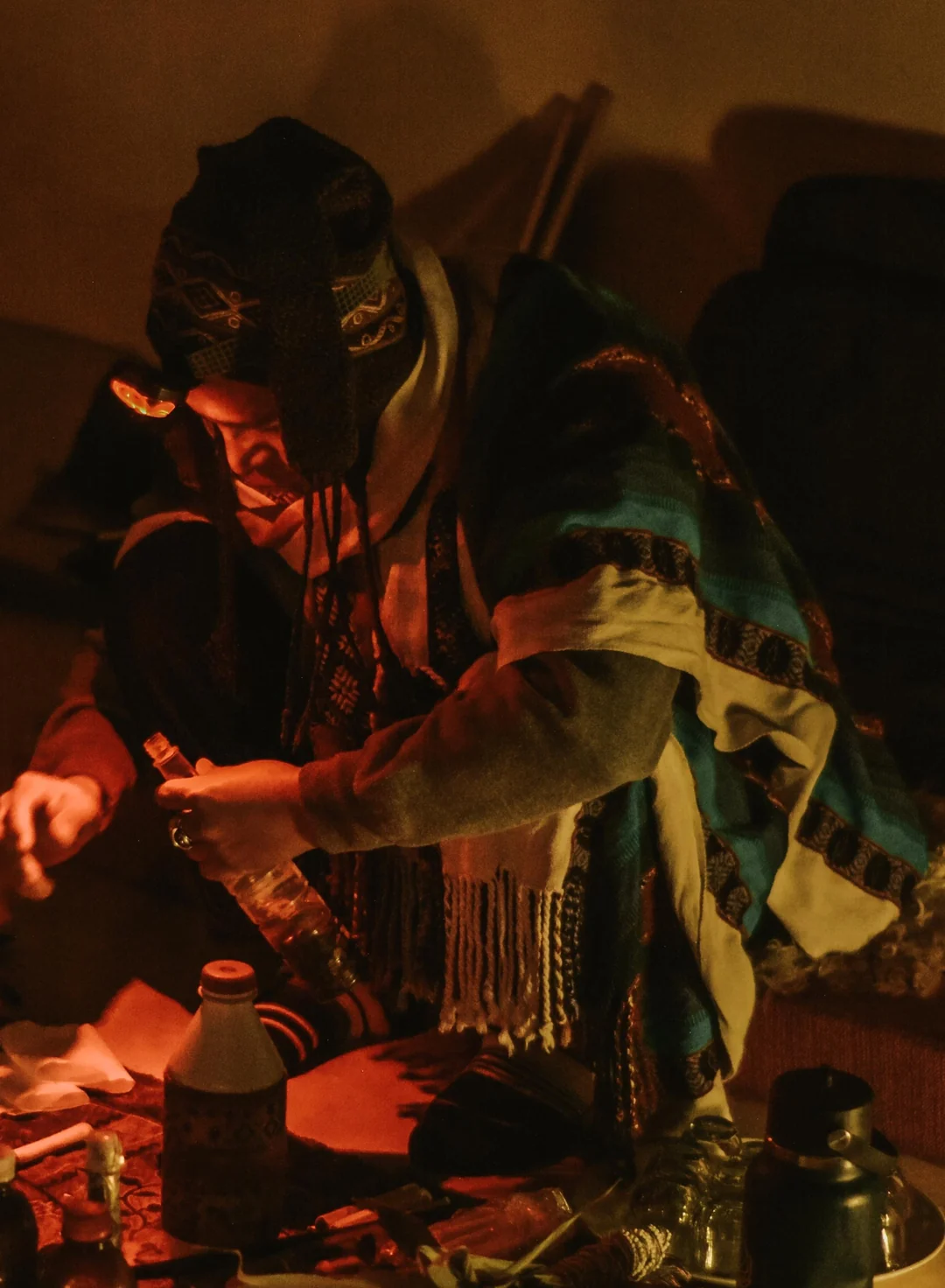
Once you are in the circle, you are held for the whole night. The ceremony holder and the team of facilitators stay present from the first cup until the last person is asleep — no one sits alone, and no one is unwatched. The group is kept deliberately small, so the people holding the space always know where each person is and how the night is landing for them.
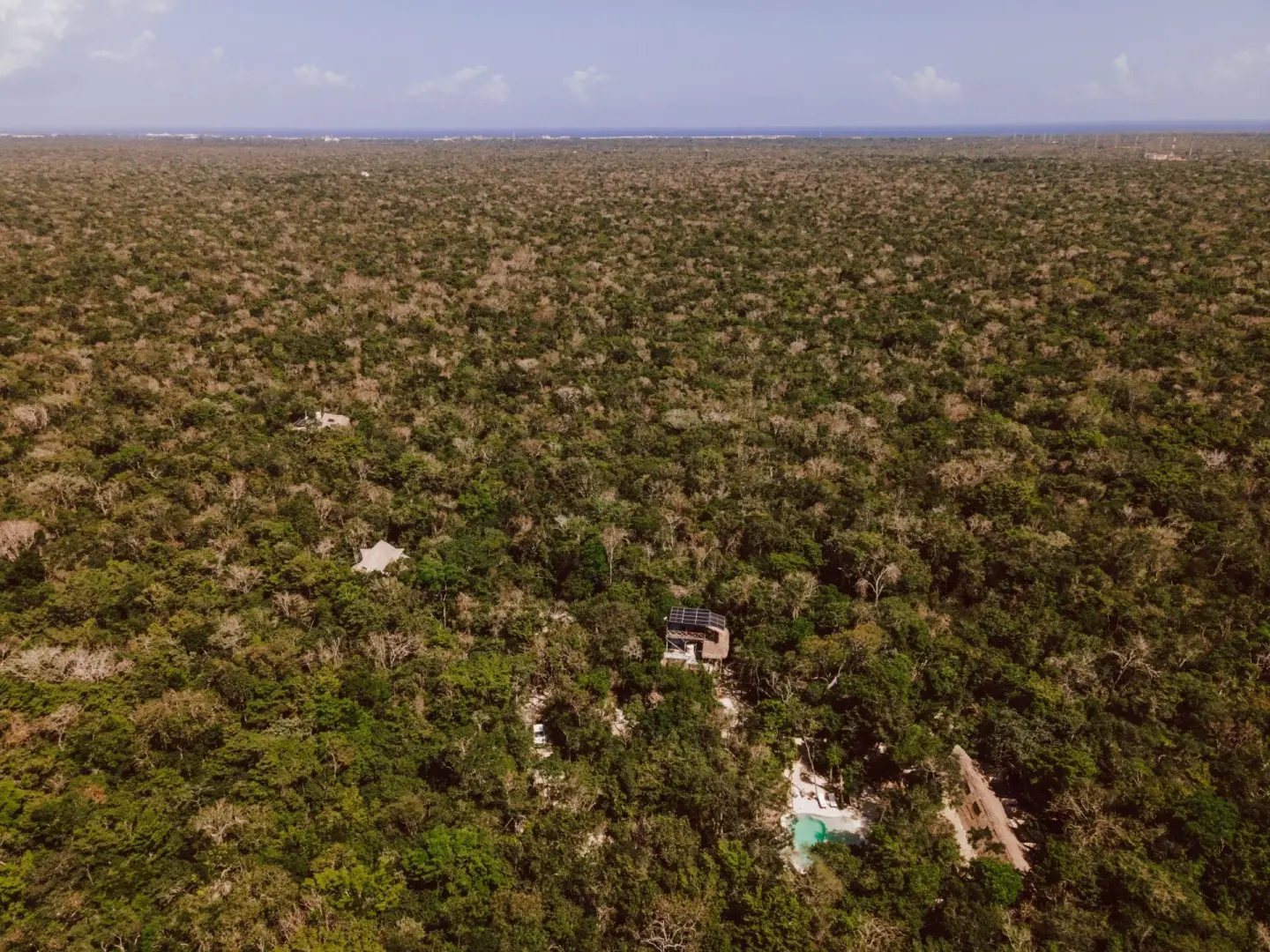
There is first aid on site. The nearest hospitals are in Tulum, roughly twenty minutes away, and Playa del Carmen, roughly thirty minutes away — and there is a plan for reaching them if it were ever needed. In practice, the most important protection happens long before the night begins: the people most at risk are identified in screening, and never arrive.
Preparation, the dieta, and integration
Safety does not begin the night of ceremony. It begins in the preparation. Guests receive a preparation guide before arrival that walks through the dieta — the dietary and lifestyle preparation in the days and weeks beforehand — and how to arrive settled and clear. And it does not end when the medicine wears off: integration, in the weeks that follow, is where the experience becomes something that actually changes a life. Both are part of how a responsible container holds you.
A note on legality
Ayahuasca is held in Mexico within a traditional, ceremonial context. Casa Arkaana works in that context, with reverence for the tradition and for the people who carry it. We are not a clinic, and we make no medical claims. We hold ceremony in the honest, careful way it has always been held.
This guide is educational and is not medical advice. Never start, stop, or change any medication without the supervision of your prescribing physician.
If you are considering plant medicine and want to talk through your own situation honestly — including any medications or health history — that is exactly what a screening conversation is for. Reach out and we will walk through it with you.
Frequently Asked Questions
Which medications require a washout before a ceremony?
Several. Antidepressants are the main ones: SSRIs, SNRIs and MAOIs all raise serotonin and cannot be combined with ayahuasca, which is itself an MAOI. Lithium, tramadol, stimulants such as Adderall or Ritalin, and St John's Wort also need to be cleared beforehand. Each one has its own washout window, and some must be tapered gradually under your own doctor rather than stopped suddenly. We review everything you take on the screening call and plan the timing with you. The full medication-by-medication breakdown and washout timing is in our guide to ayahuasca and antidepressants at casaarkaana.com/blog/ayahuasca-and-antidepressants.
Can I combine ayahuasca with alcohol, cannabis or other substances?
No. Alcohol and recreational drugs should be left well before and after a ceremony, and the preparation diet asks you to stop them in the days leading up. Cannabis is best paused too, as it can cloud the work. Anything that acts on serotonin, including supplements such as 5-HTP and St John's Wort, is a genuine safety concern with ayahuasca and has to come up in screening. If you take or use anything you are unsure about, name it on the call so we can check it properly.
Is ayahuasca dangerous?
Ayahuasca is powerful, and it carries real risks when taken without screening, preparation, or experienced support — particularly for people on certain medications or with specific heart, neurological, or psychiatric conditions. In a properly screened, well-held setting, serious adverse events are rare. The danger lives in the gaps: unscreened participants, contraindicated medications, unqualified facilitators, and no plan for when something goes wrong. Safety is not luck. It is screening, preparation, and the people holding the space.
Who should not do ayahuasca?
Ayahuasca is not appropriate for people currently taking SSRIs, SNRIs, MAOIs, or lithium without a supervised washout; for people with serious heart conditions, a history of stroke, aneurysm, or blood clots, or severe liver disease; for people with a personal or family history of psychosis, schizophrenia, or severe bipolar disorder; and during pregnancy or nursing. Other conditions call for careful, case-by-case review. This is exactly what the screening is for.
What medical screening does Casa Arkaana do?
Two steps, both personal. First, a video call with Maja and Asdru, not an outsourced intake team. We talk through where you are, what is calling you, and your medications. Second, a written medical and emotional questionnaire covering medications, mental and physical health history, and past experience with plant medicine, which we go through together before anything is confirmed. If plant medicine is not right for you right now, we say so.
What happens if there is an emergency during a ceremony?
Facilitators stay present through the entire night, from the first cup to the last person asleep — no one is left alone or unwatched. There is first aid on site, and the nearest hospitals are in Tulum, roughly twenty minutes away, and Playa del Carmen, roughly thirty minutes away. The screening process itself is the first and most important safety measure: the people most at risk never reach the ceremony, because they are identified before they arrive.
Is it safe to travel to Mexico for an ayahuasca retreat?
For most people, yes, with the usual care any trip abroad asks for. The safety that matters most is the one you choose: a centre that screens you medically before accepting you, holds ceremony with experienced people, and has first aid and nearby hospitals if something goes wrong. Casa Arkaana is twenty minutes north of Tulum, with hospitals in Tulum and Playa del Carmen close by. Read reviews, ask who serves the medicine and what tradition they walked with, and trust a place that asks you as many questions as you ask it.