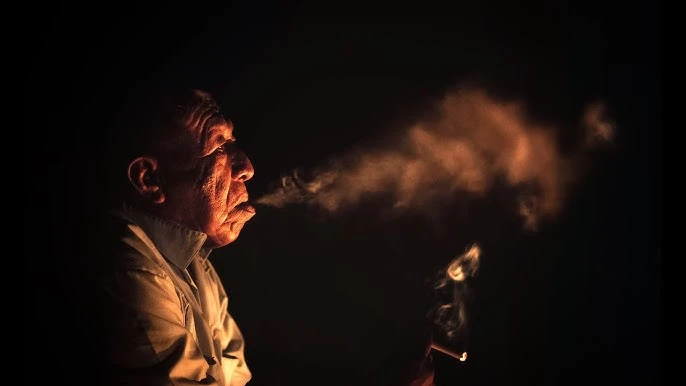
 Photo © Jack Anderson
 Plant Medicine
Ayahuasca Ceremonies in Tulum, Mexico
A lineage-held guide for first-time researchers.
Photo © Jack Anderson A lineage-held guide for first-time researchers.
If you found this page through a search, you are probably somewhere in the early part of a longer process. You are asking real questions — what is ayahuasca exactly, is it safe, is it legal, who holds these ceremonies, and what would it mean for me. This page was written to help you think through that.
A few things to know before you read further.
Casa Arkaana is not in Tulum. We are 20 minutes north, in a small jungle village called Chemuyil — a quieter place, still on the Riviera Maya, where the road narrows and the canopy closes overhead. We are honest about this because we want you to arrive knowing where you are going. The distance from Tulum is not a drawback. For most people who sit with us, it becomes one of the first things they appreciate. Chemuyil holds a stillness that Tulum gave away some years ago.
We have been hosting retreat groups here since 2021. Maja and I built this place — the temple, the casitas, the garden — and we are here when you arrive. Not a staff. Us.
This page is not a booking invitation. That lives here. This is for the person who wants to understand first, before they decide anything at all.
It was born in the jungle. The plants that carry it — the vine, the leaf — are jungle plants. The curanderos who hold the tradition are jungle people. Ceremony, done with integrity, is not a retreat amenity. It is a return to something the jungle already knows.
That matters when you choose where to sit.
The Yucatán Peninsula is one of the last large intact tropical jungles in North America. It is not a managed reserve or a carefully preserved pocket of green surrounded by development. It is a living jungle — dense, old, and largely untouched. The canopy closes over you. The animals are there. The silence at night is complete.
Beneath the jungle, there is water. The entire peninsula sits on a vast network of underground rivers — the same water table that feeds the Caribbean Sea a few minutes to the east. These rivers surface everywhere as cenotes: open mouths in the limestone, filled with ancient, clear water. In Maya cosmology, cenotes are not just water sources. They are thresholds — passages between the world of the living and the world below. The Maya have been marking them as sacred sites for thousands of years.
The Maya have a long, unbroken relationship with ceremony.
The Caribbean Sea is minutes away. The air moves through the jungle at night. There are no city lights. After ceremony, the land gives you somewhere to be — not a hotel corridor, not a parking lot, but jungle and water and open sky.
The energy here is clean. It is the simplest way I know to say what it feels like to wake up in this place after deep work — the land itself is part of the integration.
I have been sitting with ayahuasca for fourteen years. The first three were with a medicine music format — cantos medicina, mantras, a real and meaningful beginning. In my fourth year, I was connected to Maestro Gilberto Mahua. Maja and I dieted with him for the first time together, before we were married. That was eleven years ago. I am still learning.
So when I describe what an ayahuasca ceremony is, I am describing it from inside — not from a book.
The ceremony happens at night. The group gathers in circle. The facilitator prepares the space with prayer and then serves the medicine — and before pouring, blows an icaro directly into it. The curandero — or facilitator — is presenting their energy to the medicine, asking for permission and guidance. It is a traditional way of honoring and connecting with what is being served.
The medicine arrives differently for each person — sometimes within thirty minutes, sometimes longer. When it does, things that have been held down begin to move. That movement can be physical — purging, shaking, tears — or entirely inward. All of it is the medicine working. The container is what allows that work to happen safely.
The icaros are central to this. The Shipibo healing songs are not background music. They are the technology of the tradition — the language of the plants through which a curandero navigates the ceremonial space, reads what is happening in the group, protects, harmonizes, guides. When you hear Maestro Gilberto sing, something in the body recognizes it.
For a longer account of what happens inside a ceremony — the dieta, the screening, what the night looks like in detail — this article goes deeper.
There is no fixed answer — and that is honest.
We wait for everyone to arrive and settle. When the circle is ready, we drink the medicine together. From that moment, it usually takes about an hour for the medicine to arrive in the body. What follows is the peak — roughly three hours where the deepest work happens.
Around that point, the ceremony holder offers a second cup to anyone who feels called to go deeper. Some drink again. Some do not. Listen to yourself.
From beginning to end, a full ceremony typically runs six to eight hours. Sometimes shorter. Sometimes longer. It depends on the energy of the group that night, the intentions people are carrying, and the medicine itself — every batch is made by hand, and every batch is different. There is no formula.
What we can say for certain is that no one is rushed. The ceremony closes when the last person has finished the work they came to finish.
There is not one ayahuasca tradition. There are many.
The Yageceros and Taitas of Colombia's Putumayo region carry their own lineage, their own brew, their own songs. The Yawanawá of Brazil. The Huni Kuĩ. Each group has spent generations building a relationship with these plants — specific to their land, their language, their way of asking. We fully respect all of these paths.
The lineage we walk at Casa Arkaana is Shipibo-Mahua.
The Shipibo-Conibo are from the Peruvian Amazon — the Ucayali River basin. For us, they are the foundation. Like the foundation of a house: without it, you cannot build anything that holds. Their work is rooted in plant dietas — long periods of isolation with a specific plant, learning its songs, building a relationship over time. The icaro that emerges from those dietas is not composed or learned intellectually. It is received. That is why the Shipibo icaros carry what they carry.
Maja and I have been in relationship with Maestro Gilberto Mahua and his family for eleven years. We diet with him. He comes to Casa Arkaana to hold dieta. The facilitators we invite to serve medicine here carry, in some form, a connection to that same lineage.
A note that feels important: real curanderos are rare, and the lineage is thinning. The elders who carry this knowledge deeply are still alive — but not forever. The new generations do not carry the same weight. If you are drawn to this work, the time to explore it is now, while those teachers are still present.
The deeper telling — how this lineage lives at Casa Arkaana, what the temple holds, what Maja and I have witnessed over eleven years — lives on our Plant Medicine page.
Ayahuasca is in a legal gray zone in Mexico. No federal law specifically permits or prohibits its ceremonial use, and there are no documented cases of ceremonies being shut down by Mexican authorities. Traditional and lineage-held ceremonies have operated openly for years. The clearest legal risk is transportation of the brew across international borders, not the ceremony itself.
The clearest practical concern is not the ceremony itself — it is transportation across borders. Traveling internationally with the brew carries risk, and we would not advise it.
We are careful about how we communicate this. We do not advertise loudly. What we know is that traditional and ceremonial use has existed here for a long time, and that the Mexican government does not appear to be treating this as a public enforcement priority. We hold this space with discernment — choosing facilitators carefully, screening participants, and maintaining the integrity of the container. That is not only our ethical commitment. It is also what keeps the work sustainable.
This is not legal advice. If you have specific legal questions, consult a qualified professional.
If someone you love were considering this, these are the things I would tell them to check — not as a guarantee of safety, but as a genuine signal of intentionality.
01
What tradition is the facilitator trained in, and how did they come to it? A clear, grounded answer — one that names specific teachers, specific traditions — is a good sign. Vagueness is not.
02
This work is not only about drinking ayahuasca. A practitioner rooted in the tradition will have spent extended time dieting with specific plants — building a real relationship with them over years. If the facilitator's training is primarily musical or event-based, without that dieta foundation, ask more questions.
03
A responsible facilitator will ask you real questions — your health history, medications, mental health, intentions — and will have a real conversation with you, not just collect a form. They need to know who you are before they say yes. If nobody asks, that tells you something.
04
What happens after the ceremony? Is there a morning circle? Is there support in the days that follow? The work does not end when the medicine does. Any offering that sends people home without a plan for what comes next is missing something important.
05
The container matters as much as the facilitator. The space where the ceremony happens — the energy it holds, who has sat there before, how it is maintained — all of this affects what is possible. A space held with intention feels different. Most people notice it within the first hour.
06
A real practitioner prepares you. Before you arrive, you should receive a document that tells you what to eat, what to avoid, how to work with your environment and your inner state in the days before. Preparation is not optional — it is where the work begins.
07
Ceremonies held by men alone, with no feminine presence and no family accountability around them, deserve closer scrutiny. The traditions that carry this medicine most carefully tend to hold it within a community — not as a solo performance. When Maja and I host, you are entering a family's home. That changes everything about how the space is held.
These are not hypothetical. They exist in Tulum and across the Riviera Maya. I am not naming anyone, but I am being direct.
Someone who introduces himself as a shaman.
In the Amazonian traditions, real practitioners are called curanderos. A curandero does not announce the title — it is given by a community, over time, through years of dieta and practice. Someone who uses "shaman" as a marketing label has likely learned the word before they learned the medicine.
No screening, or screening that feels performative.
If you can book a ceremony the way you book a yoga class — without a real conversation, without questions about your health, your medications, your history — the person on the other side is not holding the container carefully. The medicine is not recreational. The access to it should not be either.
Claims to heal, cure, or fix specific conditions.
Anyone who tells you the medicine will cure your depression, heal your trauma, or fix your addiction is not being honest with you. The medicine opens doors — what you walk through those doors and do with what you find is entirely yours. No practitioner can guarantee outcomes, and the ones who do are selling something.
No integration. No morning after.
A ceremony that ends when the medicine wears off and sends people home without a circle, without space to speak, without any plan for what comes next — is a ceremony that treats the experience as the product. The experience is not the product. The integration is.
The medicine gives clarity. What you do with that clarity — in the weeks and months after you go home — is what determines whether anything actually changes.
Write. Create a mental map of who you are and where you see yourself in three, five, and ten years. Start with short, medium, and long-term goals so you do not get overwhelmed. The ceremony may open something large — but large things change through small, consistent decisions.
Do not take radical or impulsive decisions in the days right after. Sit with the experience. Breathe it, feel it, write it, design it. The medicine is still working.
Reach out to people you have not connected with in a while. The medicine often shows us where we need to make peace. Integration is not dramatic. It is mostly quiet: one honest conversation, one small decision, one day closer to who you already know you are.
At Casa Arkaana, integration is built into the container — not as an add-on. The days after ceremony are part of what you are coming for. The retreat page has more on how we structure this.
Instead of asking which place in Mexico is the best for ayahuasca, ask yourself: who is serving, what is the source of the medicine, and what type of container will I be held in.
The person that facilitates matters above everything else. Their training, their lineage, the years they have spent dieting and connecting with the plant realm — this is what determines whether a ceremony is safe, whether it is held, whether something useful can happen in it. When you are scouting where to go, connect with the people organising the ceremony or retreat. Ask about their training. Ask how long they have been in relationship with the tradition. Ask who their teachers were. A person without training cannot hold one and it's when things can get out of control, a bit like a madhouse.
The medicine itself is the axis of the experience. Where it comes from, how it was prepared, who prepared it, what intention was brought to that process — this is not secondary detail. The brew carries the care of the person who made it. People in the path understand this. The maturity of the plants, the prayer that was cooked with, that influences on the experience of who drinks it.
The environment is real. Ayahuasca is a jungle medicine — it belongs in the jungle the way a fish belongs in water. Working with it in a sterile urban setting or in a city apartment is possible, but you are removing the medicine from the context it evolved in. When you drink in the jungle — in the humidity, with the sounds of the night, with the energy of the land around you and the guardians of the jungle connecting with the light of the medicine — the medicine has more of what it needs. This is not mysticism. It is the observation of people who have spent decades doing this work. The closer the environment to the origin of the tradition, the more natural the container.
This is why the jungle matters. The Yucatán is not the Peruvian Amazon where these traditions were born, but it is jungle — old, living, intact. It is a place where the land itself is part of what holds you.
Choose the person first. Then the medicine. Then the place. In that order.
If something in this page is pointing you toward an experience, the next step is not a purchase — it is a conversation.
We hold retreats in a small group — never more than twelve — with the medicine, the temple, the cenote-fed pool, and the jungle all working together. For the full picture of what an ayahuasca retreat in Mexico looks like at Casa Arkaana — the days, the structure, the safety container — see our next cohorts.
Not sure if this is right for you?
30 minutes. A real conversation about where you are and whether this is the right fit.
Schedule a Connection Call →This page is for informational purposes only and does not constitute medical or legal advice. Ayahuasca affects individuals differently, and participation carries inherent risks. If you have existing health conditions, take prescription medication, or have a history of psychosis or severe mental health challenges, please consult with a qualified healthcare provider before attending any ceremony. Nothing on this page should be interpreted as an endorsement of any specific substance or as a claim that plant medicine ceremonies treat, cure, or mitigate any medical condition.