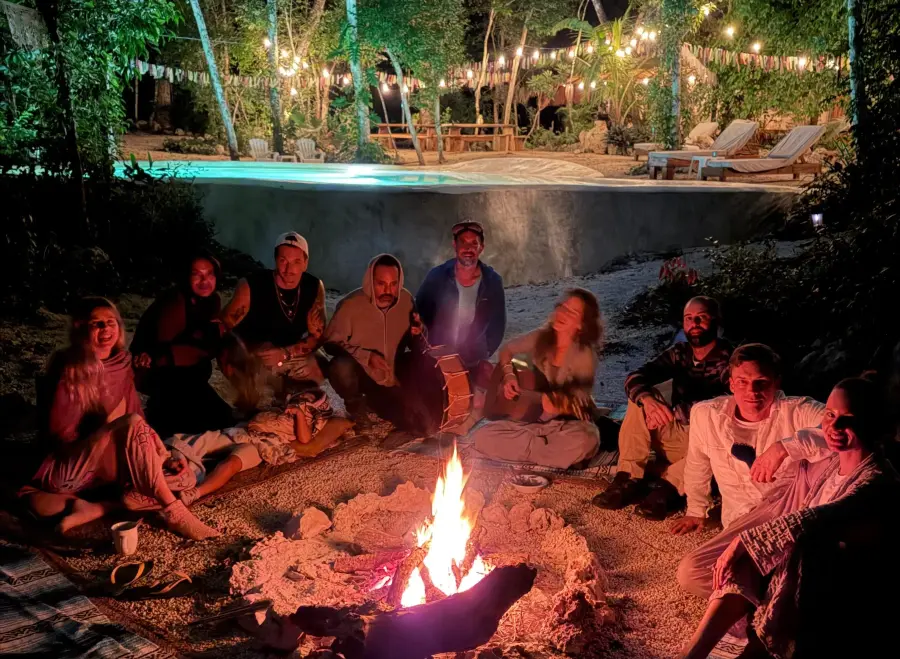
How much does it cost to host a retreat in Mexico? Real numbers from a facilitator hosting since 2021 — venue fees, food, marketing, and the break-even math.
How much does it cost to host a retreat in Mexico? This is the question every facilitator asks first — and the one most venues answer with vague estimates. Here are the real numbers behind it.
The most common thing I hear from facilitators before they book is some version of: I need to make the numbers work first.
Not everyone is comfortable with spreadsheets or financial planning — and that is completely fine. What I have noticed after 40+ retreats is that when people have the right information upfront, the decision becomes clear. When they don’t, the whole process feels murky.
Part of that murkiness comes from how different retreat centers present their pricing. Quotes can look very different from one place to the next, and it is not always easy to compare them. Some centers also don’t offer full privacy — meaning your group may overlap with other guests — and that is another variable worth understanding before you commit.
This post breaks down the four cost categories every facilitator needs to account for. The actual numbers — what we charge at Casa Arkaana and a worked example of the break-even point — are in the Host Pack and quote, which I put together specifically because facilitators kept asking me for this.
How Much Does It Cost to Host a Retreat in Mexico?
When you are planning a retreat in Mexico, your budget has four distinct parts. Most articles only address the first one.
1. The venue fee. This is what you pay to rent the property — exclusive use of the space, rooms, ceremonial areas, and grounds. At a property like Casa Arkaana, this is a flat nightly rate regardless of group size — the whole venue is yours during your dates, no overlap with other guests. The rate differs by season. Market range across Mexico for exclusive-use retreat venues: roughly $800–$3,000 per night depending on capacity and season.
2. Food costs. This is a per-person, per-meal cost. At Casa Arkaana it covers breakfast, lunch, a mid-afternoon snack, and dinner — prepared from local and farm-sourced ingredients, dieta-aligned for ceremonial retreats. This is separate from the venue fee. Two pricing models are common in Mexico: some venues bundle food into an all-inclusive per-person rate ($90–$220 per person per night, like Playa Viva or Lunita); others separate the venue fee from food, like Casa Arkaana. Both models work — knowing which one applies helps you compare quotes correctly.
3. Marketing support. We promote your retreat through our own channels and take a 10% commission only on participants we source — never on your own audience. No flat fee.
4. Your own costs. This is what most facilitators undercount. Your flights, your airport transfer, any pre-retreat nights, travel for co-facilitators you bring. You are a cost of running this retreat. Include it in your break-even math or the number will be wrong.
The Break-Even Point
Your break-even is the minimum number of participants you need to cover all your costs. Once you know that number, you can build your whole strategy around it — how to price, how many spots to fill before the retreat pays for itself, and how much room you have for early bird offers.
This matters because it tells you:
- How many registrations you need before the retreat is covered
- How much flexibility you have on early bird pricing
- Whether the retreat makes sense at a smaller group size
At Casa Arkaana, facilitators typically break even at 3 to 4 paying participants for a 5- to 7-day retreat. Because our nightly venue rate is flat regardless of group size, the math works even for smaller groups — you don’t need to fill 12 or 16 seats before the retreat pays for itself. That gives you room for early bird pricing and less pressure to sell.
At pricier venues, break-even can climb into the 8 to 10 range. Which number applies to you depends on venue rate, group size, and your own costs. The Host Pack and quote include worked examples for two realistic group sizes so you can see exactly where the break-even point lands for your retreat before you commit to a date.
Why Host a Retreat in Mexico Instead of Bali or Guatemala?
It’s true — Mexico is not the cheapest place to host a retreat. Bali is cheaper. Guatemala is cheaper.
But what Mexico has that neither of those places can match is accessibility. Cancun is one of the most well-connected airports in the Americas, with direct flights from dozens of cities across the US, Canada, and Europe — at prices that are often surprisingly affordable. Casa Arkaana is 90 minutes from Cancun Airport and 60 minutes from Tulum International Airport.
What that means in practice: your participants can fly in on a Thursday and leave on a Monday. A long weekend that actually feels like a full retreat. For North Americans especially, that removes one of the biggest friction points — the long-haul journey that makes Bali feel like a major commitment. For UK and European facilitators, direct flights from London and Frankfurt to Cancun make Mexico as accessible as many Mediterranean destinations, and considerably more affordable per participant.
That accessibility translates directly into higher fill rates and lower drop-off between registration and arrival. And when you are doing the break-even math, fill rate matters more than venue cost.
The number that matters is not what you pay for the venue — it is what you net per retreat after all costs. Mexico consistently wins that comparison.
Asdru
Co-Founder
Two ways to move forward.
Request pricing if you know your dates — or start with the Host Pack if you'd like the full numbers first.
Have a question first? Book a 15-min call.
Looking for a retreat centre for hire in Mexico with exclusive use, no shared spaces, and a single contact from planning to arrival? That is what Casa Arkaana is built for.
Frequently Asked Questions
How much does it cost to host a retreat in Mexico?
Retreat venue costs in Mexico typically run from $800 to $3,000 per night for exclusive use, depending on capacity and season. On top of that you need to budget for food, marketing costs, and your own travel. Break-even depends heavily on the venue: at Casa Arkaana, most facilitators need just 3 to 4 paying participants on a 5- to 7-day retreat because our nightly rate stays flat regardless of group size. At pricier venues, break-even can climb to 8 or 10. The Host Pack shares full Casa Arkaana pricing with a worked break-even example for your group size.
How to host a retreat in Mexico?
Six steps: (1) define your retreat theme, group size, and dates; (2) find a venue that matches — exclusive use is worth it, avoid shared venues if you want a real container; (3) reserve dates with a deposit 6–12 months out; (4) build your pricing and break-even math (venue + food + marketing + your own costs); (5) market the retreat and open registration; (6) plan the logistics with the venue in the 60–90 days before. At Casa Arkaana we walk facilitators through steps 2–6 as part of the Host Pack conversation.
How far in advance should I book a retreat venue in Mexico?
Six to twelve months is the range that works. Twelve months gives you time to build a waitlist, launch marketing, and secure early-bird deposits. Six months is the minimum for a first retreat — enough time to fill it if you already have an audience. Any less and you are squeezed between finding participants and paying deposits.
What group size is best for a first retreat?
For a facilitator's first retreat in Mexico, 8–12 participants is the sweet spot. Large enough to cover your costs comfortably, small enough to create a real container, and manageable if things do not go perfectly. Larger groups (16–20+) require more marketing spend, more logistics coordination, and higher stakes if you do not fill.
Does the venue rate change based on group size?
No — at Casa Arkaana the nightly venue rate is flat regardless of whether you have 8 or 20 participants. Food is charged per person per meal. The Host Pack and quote show the break-even scenarios for different group sizes so you can see how the math plays out.
Can I use outside catering instead of your kitchen?
No — the Casa Arkaana kitchen is part of the venue. Dieta-aligned, locally sourced, ceremonially prepared food is not something we separate from the retreat container.
What if I need to cancel the retreat?
Our cancellation and rescheduling policy works in tiers. 180+ days before: 100% venue credit valid 12 months, minus $150 admin fee. 61–179 days before: 50% venue credit valid 12 months, 50% forfeited. Under 60 days: all payments forfeited. Re-book exception: if Casa Arkaana fills your cancelled dates with another group, you receive 100% credit minus $150 regardless of how close to the retreat date you cancel. Rescheduling is processed as a cancellation — a new deposit is required and your credit applies toward it. Force majeure (natural disaster or government travel ban): 100% credit valid 12 months. Credits are non-transferable, non-cashable, and expire 12 months from the cancellation date.
Is there a minimum stay?
Yes — we ask for a minimum of four nights. Most retreats run five to seven. For a first retreat in Mexico, six nights gives you enough time for a genuine arc: arrival and settling, the work, and real integration before departure.