After 40+ retreats, we still take notes after every one. The complete checklist for facilitators — logistics, food, permits, team, and what most venues forget.
Maja came from events. I came from restaurants, concerts, fundraisers — and both of us had been drawn to holistic and plant medicine work long before Casa Arkaana existed. We did not start from zero. But retreat hosting has its own rhythms — the preparation, the timing, the flow of the container — and those take experience to understand.
This checklist is that document. Updated after every retreat, organized by timeline. Use it however is useful to you. Every retreat has its own needs. But the things that get forgotten under pressure tend to be in the same places every time.
9 to 6 Months Out — Prepare
This is where the work begins. Before you tell anyone about your retreat, get your foundation in place.
Confirm dates and secure the venue
Until you have a signed agreement and a deposit paid, your dates do not exist. Talk to your venue before you start marketing. A single confirmed date is more valuable than three possible ones.
Design the program skeleton
You do not need the full schedule yet. But you need to know: How many nights? How many ceremony or main session nights? What modalities are woven in between? Is this for a general audience or a specific community you already hold?
Build your materials
This is what takes the most time and what most facilitators underestimate. The brochure, the pricing, the landing page, the photographs, the platform listings, the preparation documents and agreements — none of it happens fast. Get everything ready before you launch anything.
Prepare your social media strategy
Know what you are going to post, when, and where before you go public. Your early content should build anticipation and trust — not just announce availability.
Understand visa and passport requirements for your participants
Travelers from the US, Canada, EU, and UK do not need a visa for Mexico for stays under 180 days. But some nationalities do require advance visas. Also important: make sure your participants’ passports are valid with at least two months remaining — airlines and immigration can deny boarding or entry if a passport is close to expiration. Flag both of these in your first outreach and encourage people to check early.
6 Months Out — Launch
Everything from the previous phase is ready. Now you open registration.
Open registration with early bird pricing
Early bird pricing rewards people who commit early — and it helps you cover your upfront costs before the retreat is full. Even a handful of early bird registrations can make the financial risk manageable. A deposit is a commitment. Communicate your cancellation policy in writing before anyone pays.
Go live on platform listings
Book Retreats, Retreat Guru, Tripaneer, and any other platforms where your audience looks. Your listing should be ready to publish the day registration opens.
Start scheduling calls
People have questions. Be available to answer them. A 30-minute conversation with someone genuinely interested converts at a much higher rate than any email.
Send preparation documents and agreements
Not contracts — agreements. Documents that cover what the retreat involves, who it is for, what participants can expect, health and safety requirements, confidentiality, and cancellation terms. Have these ready to send the moment someone registers.
Confirm integration support
What will you offer participants after the retreat ends? Whether it is follow-up calls, integration circles, or referrals to specialists — design it now and communicate it before participants arrive, not afterward.
3 to 4 Months Out
Book flights for your facilitation team
Prices rise as dates approach. Three to four months out is the right window — early enough to get good prices, late enough that your team is confirmed.
1 to 2 Months Out
Last minute availability
If you still have open spots, this is the right moment for a last minute offer. Not a desperate discount — a genuine invitation for people who move more slowly or who are working with a tighter budget. Make it accessible without undermining what you are offering.
Collect dietary restrictions and health information
This cannot be left to the last week. You need enough time to plan the menu, flag anyone whose health situation requires a conversation, and communicate with the kitchen.
At Casa Arkaana, our kitchen prepares tailored meals throughout every retreat. When I send the dietary needs one month out, the kitchen can plan properly. When it arrives three days out, someone gets surprised at dinner.
What to collect: allergies, intolerances, dietary practice (vegan, vegetarian, omnivore), and any health conditions or medications relevant to participation. If your retreat involves plant medicine, the health questionnaire is also where you screen for contraindications.
Collect arrival logistics
Flight details, arrival times, airport of entry. CUN (Cancun International) is the main gateway for the Riviera Maya, with Tulum International as a closer option for some routes. At Casa Arkaana, we coordinate airport transfers — but we need this information early enough to organize them properly.
2 Weeks Out
Finalize your program schedule
Not just the main sessions — the full daily rhythm. When does the day start? What happens in the morning? What is the container for free time? How are the ceremonial nights sequenced relative to the integration days?
Less is more here. Two to four activities per day is enough. People need time to feel each activity, to journal, to process. A packed schedule leaves no room for the retreat to breathe — and the breathing is where a lot of the work happens.
Confirm all logistics
Final headcount, room assignments (king or twin beds), all dietary needs confirmed, menu aligned with the kitchen.
Review your facilitator kit
At Casa Arkaana, the facilitator kit goes out when you sign with us — not at the last minute. By two weeks out you should have reviewed the emergency protocols, safety information, and promotional material. If anything needs clarification, this is the moment.
Emergency contacts to have confirmed: nearest hospital, nearest clinic, nearest pharmacy, local emergency number, who has medical training in your group, and the decision tree if someone needs medical attention.
Arrival Day
The facilitator arrives first
Arrive a few hours before your first participant. Walk the space. Feel it. Make the final payment to the venue. Check every detail while you still have time to adjust.
This is not logistical excess. The container you create before participants arrive is real — and they can feel whether it was there when they walk in.
Welcome intentionally
The first hour sets the tone for the entire retreat. Not everyone has a dedicated assistant — but ideally someone is there whose only job during the arrival window is welcoming people, showing them their rooms, and making sure they feel at home before the facilitation work begins. At Casa Arkaana, participants arrive to fresh agua fresca and afternoon snacks waiting for them.
Opening circle
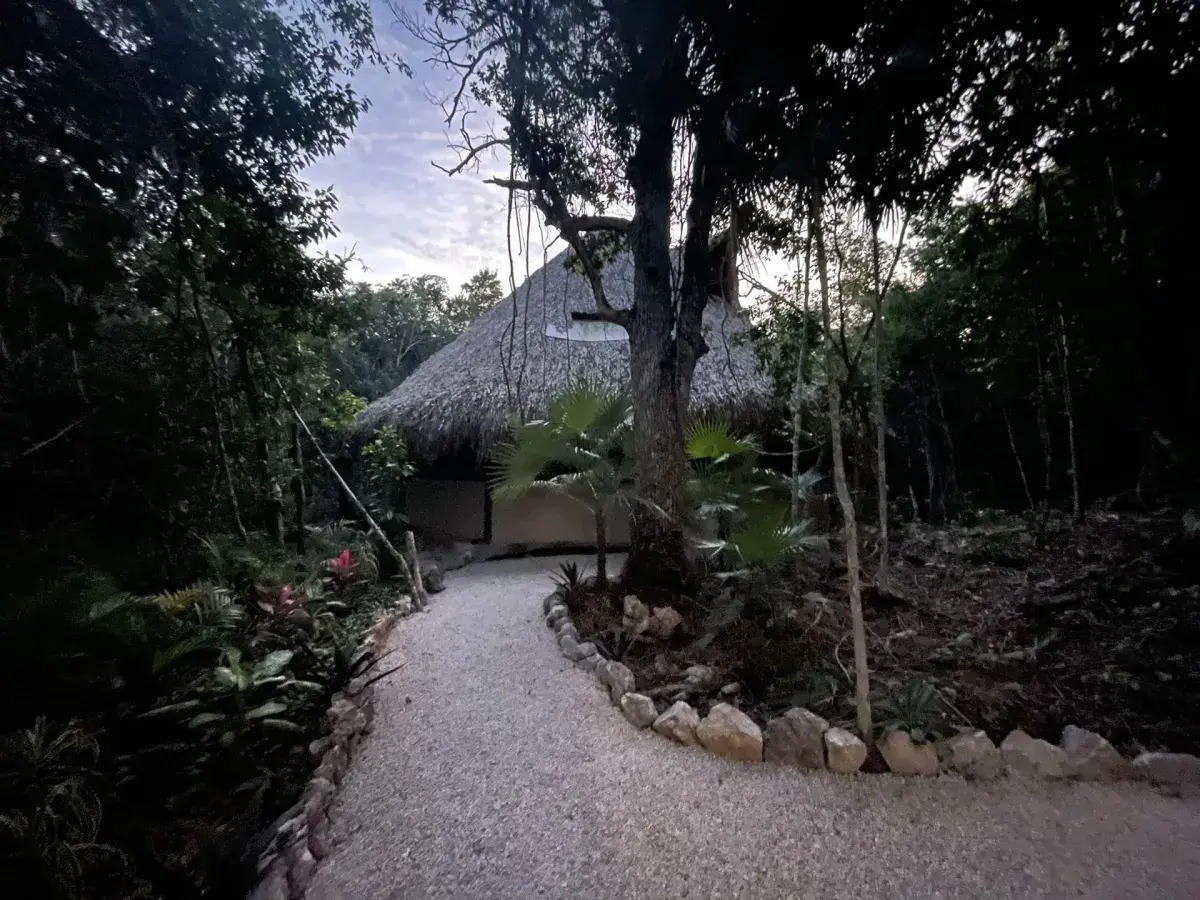
This is where the group becomes a group. Introductions, intentions, the agreements of the container, and a grounding into the space and the land. At Casa Arkaana, after the first dinner together, we offer a live introduction to the property — the temple, the temazcal, the cenote pool, the jungle paths. Participants receive a house manual before they arrive, but there is a difference between reading about a place and being walked through it by the people who hold it.
During the Retreat
Hold the daily rhythm
Consistency matters more than perfection. A morning practice that starts on time, meals at known hours, clear transitions between segments — these create a ground that participants can trust.
Co-facilitation in ceremony
Define roles clearly before the ceremony night. Who is the lead? Who supports participants who need help? Who manages the physical space? At Casa Arkaana, we are present throughout every retreat precisely because we are part of the support system if something occurs.
Keep everyone connected
A WhatsApp group with all participants, the facilitation team, and the venue is one of the most practical things you can set up before the retreat starts. It becomes the main channel for logistics, schedule updates, and anything that comes up during the days — and it gives participants a place to reach out if they need something and are not sure who to ask.
After the Retreat
Closing circle on the final day
Even 90 minutes of intentional closing — before anyone packs or says goodbye — is worth more than a rushed farewell at checkout. A space for reflection, gratitude, and what people are carrying home. This happens while the group is still together, not after.
Post-retreat follow-up
Within a week of the retreat ending, send a message to the full group. Not a sales message — a check-in. How are you landing? A reminder of any integration support you offered.
Review your numbers
Look at what you projected and what you actually spent. Where did you underestimate? This is not about judgment — it is data. It makes the next retreat’s planning more accurate.
30 Days After
Schedule an online integration circle
A group call four to six weeks after the retreat is one of the most valuable things you can offer. People have had time to land, to process, to notice what has shifted — and coming back together in a held space, even virtually, extends the container in a way that individual follow-ups cannot. Make it part of your offering from the beginning, not an afterthought.
Update your checklist
What did you forget that you did not expect to? What came up that was not on the list? Update the document now, while it is fresh. You will thank yourself before the next retreat.
A Note on Hosting at Casa Arkaana
Everything in this checklist applies wherever you host. But if you want a venue where the kitchen builds a personalized menu around your group’s specific needs — dietary restrictions, ceremonial requirements, the timing of meals around ceremony nights — and where the temple was designed for this work, and where there are people on the ground throughout the retreat who know how to hold the space, we would be glad to talk.
The host page explains what that collaboration looks like. The budget article walks through actual costs.
Frequently Asked Questions
How far in advance should I start promoting my retreat?
Six months is the minimum. Eight or nine months is better if you are building an audience from scratch, hosting for the first time, or if participants need to travel internationally. The lead time on retreat bookings is longer than most facilitators expect.
Do I need to require travel insurance for participants?
You cannot require it, but you should strongly recommend it — specifically insurance that covers medical evacuation.
What if I cannot fill the retreat?
Build your pricing and venue commitment around a minimum viable group size — the number at which the retreat is still financially sound. Know this number before you open registration.
Can Casa Arkaana help with local logistics for my participants?
Yes. We coordinate airport transfers, can recommend local accommodations for extended stays, have relationships with local practitioners for supplementary sessions, and can connect you with local integration specialists.
What is the best way to communicate with international participants?
WhatsApp is the universal standard in the retreat world. Create a group for your cohort early — it becomes a container in itself, a place where people can begin to connect before they arrive.