A temazcal ceremony is a Mesoamerican sweat lodge — a pre-Hispanic purification ritual. What happens inside the temazcal at Casa Arkaana, 20 min from Tulum.
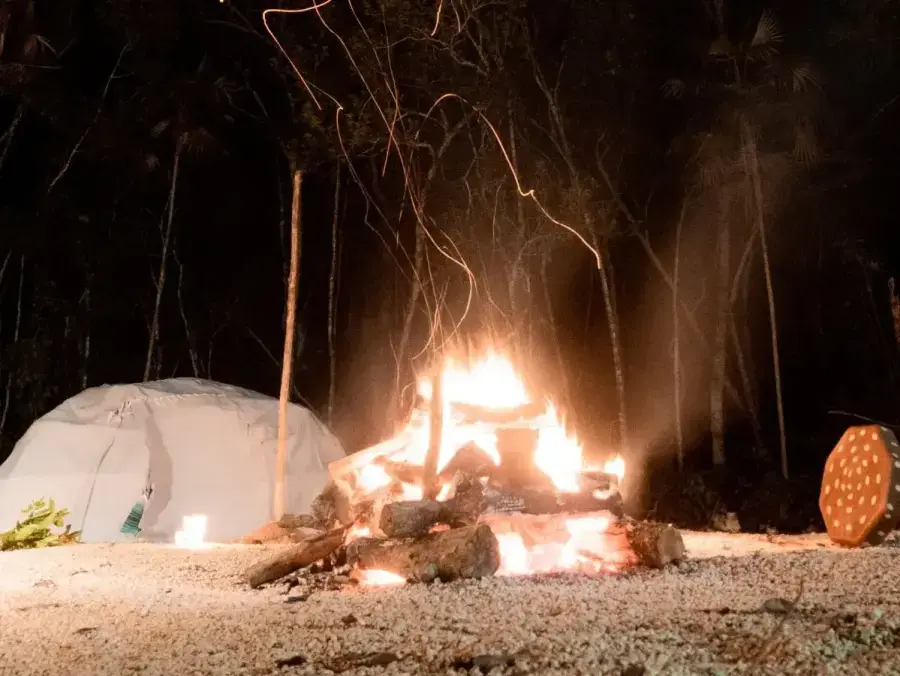
The fire has been burning since before dawn. Volcanic stones — called abuelitas, grandmothers — glow orange in the pit beside the temazcal. When they are carried inside and placed in the center, the darkness fills with heat and the sharp sweetness of copal.
You have never sweated like this. And yet, something in your body recognizes this place. This is what happens inside a temazcal ceremony.
What the Temazcal Is
In Mexica tradition, before the Spanish arrived, nearly every home had a sweat lodge. It was not a ceremony reserved for special occasions — it was part of daily life. A purification ritual. A way of cleansing body and spirit as a matter of course. In pre-Hispanic Mexico, temazcals were typically permanent structures — built from clay, stone, or whatever the land provided.
Further north, the Lakota peoples carried their own sweat lodge tradition: the Inipi. Because they were nomads who moved with the seasons, theirs were built from sticks — light, temporary, rebuilt wherever they went.
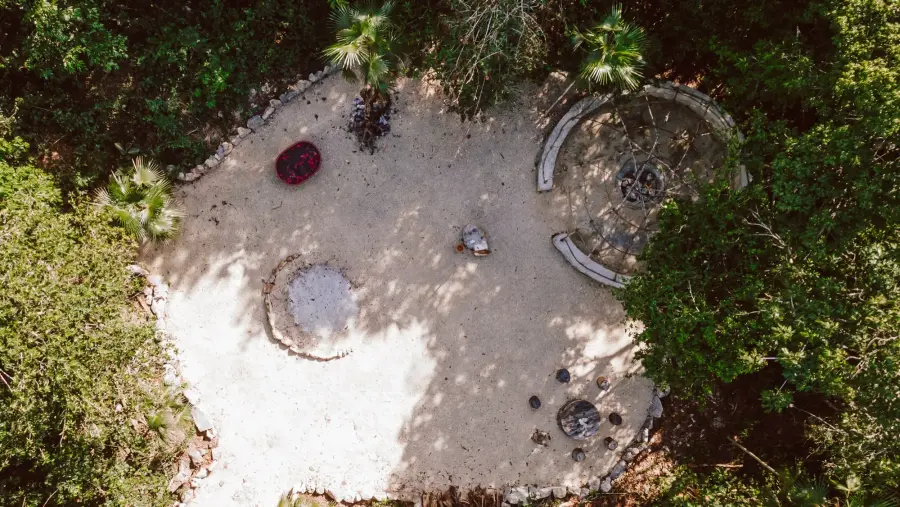
At Casa Arkaana, we built a hybrid that honors both. The jungle here in the Riviera Maya sits on a bed of limestone. The bedrock is everywhere, and it makes it nearly impossible to drive sticks directly into the ground. So we created a limestone frame — stone foundations with holes drilled in — and the sticks rise from there. When the sticks need to be renewed, they come out easily and go back in just as easily. The structure itself endures. The covering is always fresh.
In this way, our temazcal honors the Mexica, Mayan, and Mesoamerican traditions, as well as the tradition of our brothers from the north. It is a meeting of two lineages in one place.
The door faces east, to receive the morning sun every day. From the door, the alignment extends outward: the altar, then the grandfather fire, with a half-moon of stones around it — a road, a channel, connecting spirit with matter, stars with earth. The temazcal represents the womb of Mother Earth. When you enter, you are returning to her.
The work is made complete by steam and herbs. As the steam rises from the heated stones, the properties of the herbs enter the body through the open pores — offering healing, protection, and purification that goes deeper than the surface.
Across the Americas, every indigenous group carries their own sweat lodge tradition — their own design, their own songs, their own medicine. All beautiful in their own way. At Casa Arkaana, we have walked with different traditions and learned from different elders, and we have adapted the work to our environment — the Mayan jungle, the land, the climate, the spirit of this place.
The ceremony is led by a temazcalero, a keeper of the fire and the songs. Our temazcal has its own place in the jungle — nestled between the cenote-fed pool and the temple, held by the trees on all sides.
Before You Enter
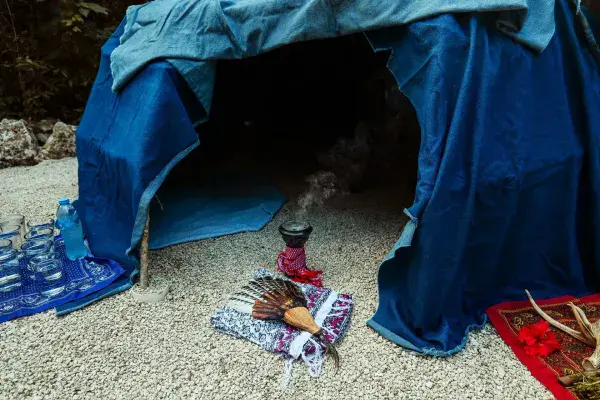
Before the ceremony begins, we take time. We give an introduction — what will happen, how it will unfold, what to expect. Then we smudge everyone with copal, clearing and preparing the energy field before entering the sacred space.
Each person receives tobacco to offer to the grandfather fire. This is where we set our intention. Standing before the fire, we present our intention to the seven directions — and then we offer it to the fire. This is how we tune in to enter this purification ritual.
Just before entering, we say: “For all my relations.” We are always honoring all our relations — every being, every connection, everything we carry.
Everything in the ceremony moves clockwise. We enter clockwise. We exit clockwise. In the northern hemisphere, this is how energy naturally flows. We move with it.
Women enter wearing a long skirt. Men wear shorts. This is how we honor the ceremony and the space.
What Happens Inside
You enter on your knees. The darkness is complete. The abuelitas hiss when water hits them — copal smoke rises, songs begin.
The ceremony moves through four doors, four rounds. Each door opens briefly to the outside for airflow, and marks a direction, an element, and a specific work.
The East is fire — where the sun rises. In this door we honor the Great Spirit and open ourselves to new beginnings.
The South is water. We bring our families into the circle here — those who raised us, those who depend on us.
The West is earth — the place of duality. We work with all our relations: friends, neighbors, coworkers, the people we move through life alongside.
The North is wind. This is the door of our thoughts and our ancestors — those who came before us and whose presence we carry.
Throughout each door, the songs we chant are prayers. We use them to invoke, to ask, and to give thanks to the spirit world. Across the Americas, the understanding has been passed down for generations: in order to receive, we must first give. In the temazcal, what we give is our sweat. That exchange — that constant giving and receiving — is what keeps the balance. In the ceremony and in life.
Your intention is the anchor. When the heat rises and the body wants to resist, the intention is what keeps you present. And when it gets very hot, the best thing to do is simple: lie down. The floor is the coolest place in the temazcal.
At Casa Arkaana, we hold a family and beginner-friendly ceremony. We are not trying to push limits. We want people to feel the medicine, to experience the four directions, and to leave transformed — not overwhelmed.
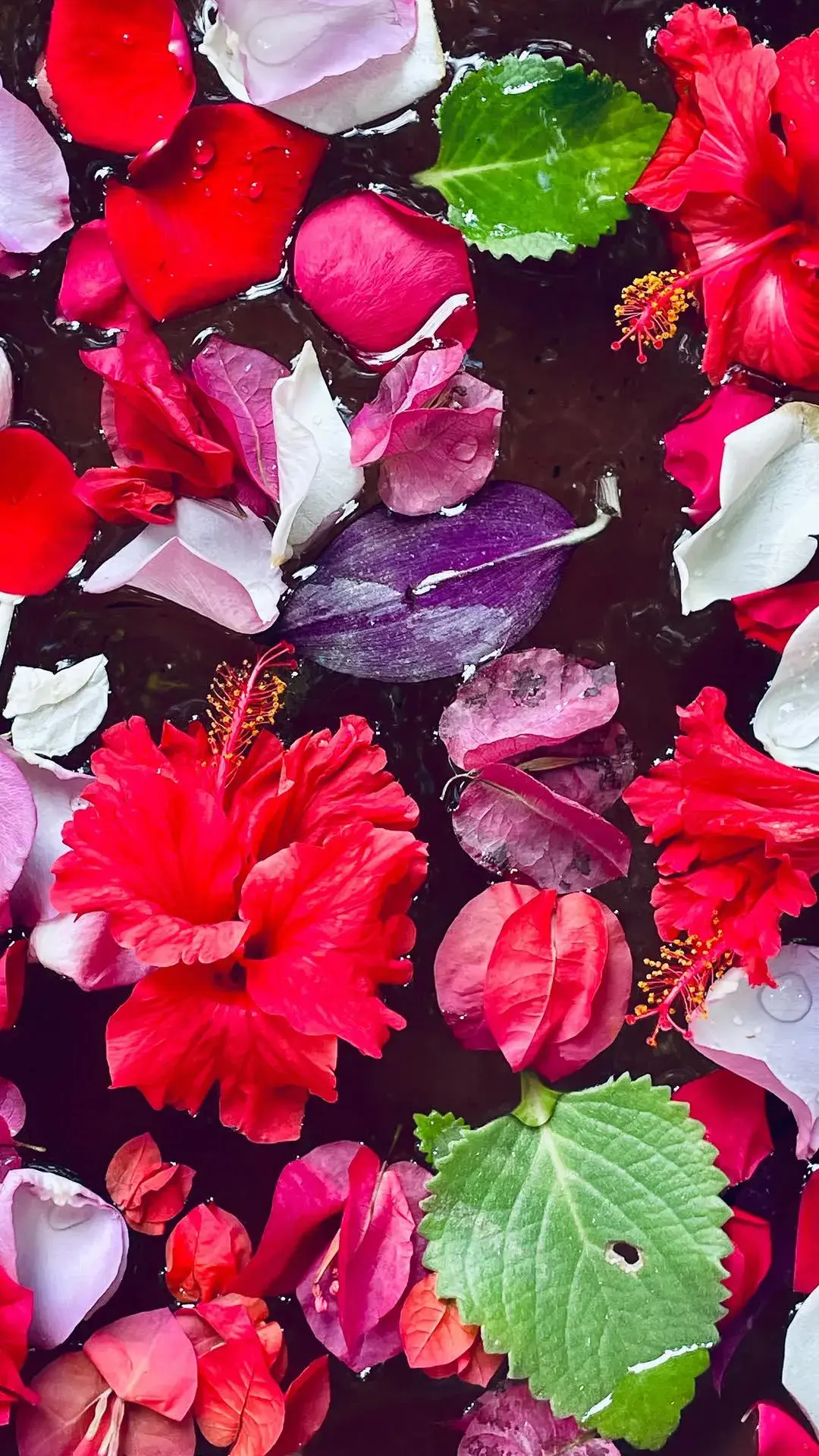
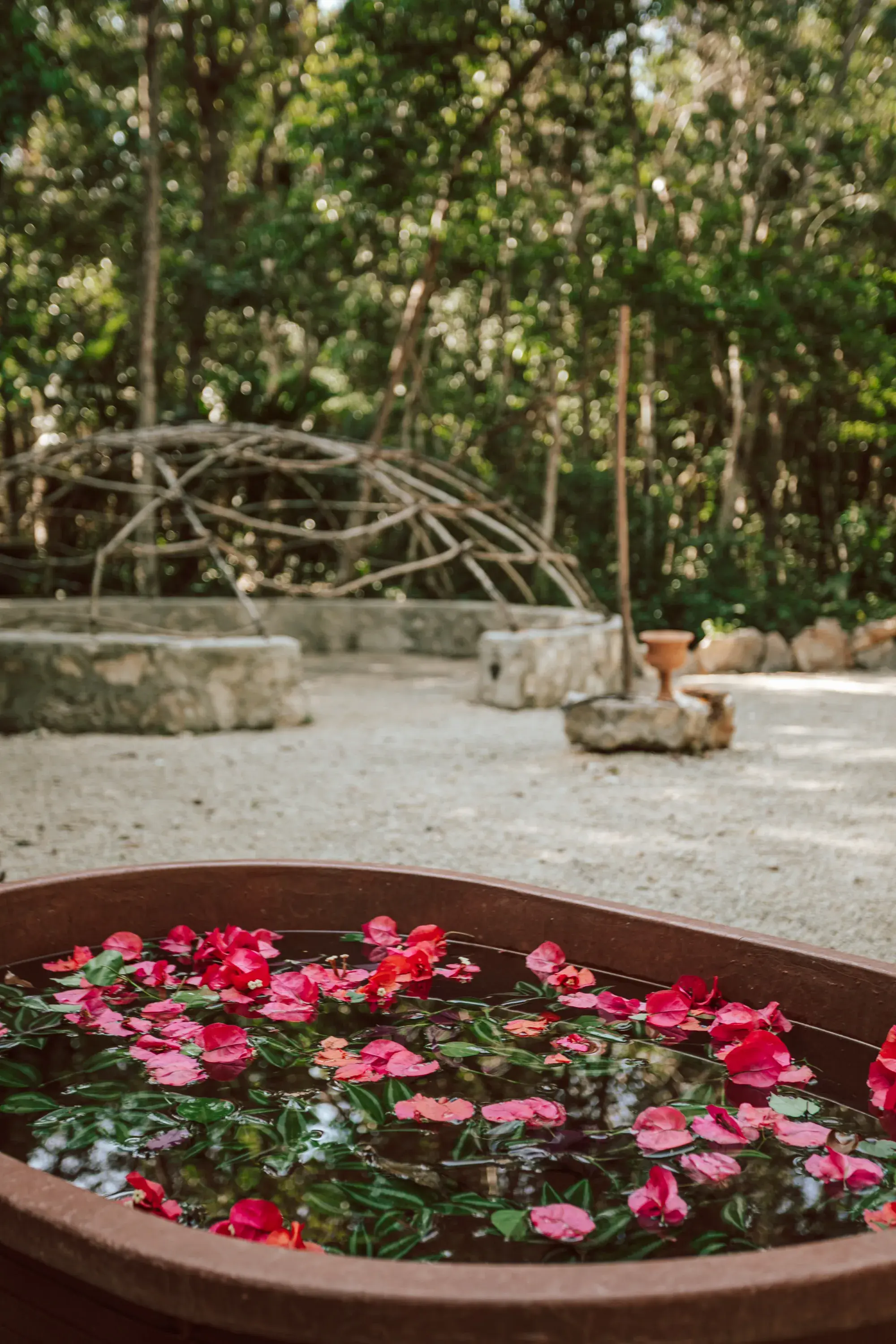
When you emerge, we close the work with a flower-and-herb bath. Your pores are fully open from the heat. The flowers are not decoration — they are absorbed directly into the skin, sealing the ceremony and offering protection as you return to the world.
“We had an amazing temazcal experience at Casa Arkaana. Asdrubal and Omar were incredible hosts and treated us like friends! The retreat space is absolutely beautiful and so peaceful! We cannot wait to return in the future!”
— Jessica Finnegan · Google Review, April 2024
Who It Is For
The temazcal is for anyone wanting to open their heart, to offer a prayer, to give something to themselves and to the spirit. It is genuinely good for everyone. It regulates the nervous system, opens the body, and creates a space where something can shift.
It is for people at transitions. For those carrying grief, or old stories, or bodies that have forgotten how to rest.
One thing I have noticed over the years: because it is pitch black inside, people talk. People who would never open up in a lit room, who carry things they do not want others to see — inside the temazcal, in the dark, something loosens. You cannot see who is speaking. No one can see you. There is no exposure, no judgment, no faces watching. And so people share. Things they have been holding. Things they needed to say out loud. The darkness, which might seem like a challenge, becomes a kind of freedom.
It is not recommended during pregnancy or for those with certain heart conditions. We always ask before the ceremony. Safety is sacred.
Temazcal Ceremony Near Tulum, Mexico
If you are searching for a temazcal ceremony near Tulum, the Riviera Maya offers a rare combination — the ceremonial practice sits on top of Mayan land, drawn from Mayan bedrock. Casa Arkaana is in Chemuyil, 20 minutes from Tulum, on five acres of intact Mayan jungle. Our temazcal is nestled between the cenote-fed pool and the temple, held on all sides by the forest.
Many travelers come to Tulum for beach retreats or cenote diving. Fewer know that the region is one of the most grounded places in Mexico to experience a temazcal — because the tradition is not imported here. It is ancestral to this land. When you sweat in a temazcal in the Yucatán, you are honoring a practice that has been held in this jungle for centuries.
Book a Temazcal at Casa Arkaana
Our temazcal ceremonies are part of most retreat programs here. We work with facilitators who carry lineage — this is a living practice, not a performance for guests.
If you want to host a retreat that includes temazcal, or if you are coming as a guest and want this to be part of your stay, reach out directly. There is only so much a page can hold.
Frequently Asked Questions
What is a temazcal ceremony?
A temazcal is a traditional Mesoamerican sweat lodge — a pre-Hispanic purification ritual practiced across Mexico and Central America for centuries. Volcanic stones called abuelitas are heated in an outdoor fire and carried into a low, dark chamber where water and medicinal herbs release steam. The temazcal represents the womb of Mother Earth. At Casa Arkaana, a ceremony moves through four rounds — East, South, West, and North — each honoring a direction, an element, and a specific work.
How long does a temazcal ceremony last?
A traditional temazcal ceremony at Casa Arkaana lasts around two to two and a half hours inside the sweat lodge, with four rounds — called doors — plus preparation, intention-setting, and a flower-and-herb bath afterward. The full experience from arrival to closing typically takes three hours. We hold a family-friendly and beginner-friendly rhythm, so no one is pushed past what feels right.
Is a temazcal safe?
For healthy adults, a temazcal is very safe when held by an experienced temazcalero. At Casa Arkaana we hold a beginner-friendly ceremony — no one is pushed past what feels right. That said, temazcal is not recommended during pregnancy or for anyone with certain heart conditions. We always screen participants beforehand. If you have any medical concerns, tell us before the ceremony. Safety is sacred.
How hot does a temazcal get?
The temperature of a temazcal varies depending on the energy of the people and who runs it. The heat comes in waves as water is poured over the abuelitas. When it feels too much, the simplest answer is to lie down on the floor — the coolest part of the temazcal. Beginner-friendly temazcals like ours are held at a temperature range that allows people to stay present and complete all four rounds without being overwhelmed.
What do you wear to a temazcal ceremony?
Women traditionally wear a long skirt. Men wear shorts. Both should be clothes that can get wet with sweat — natural fibers like cotton or linen are best. You will also want a towel and a change of clothes for afterward. At Casa Arkaana we share guidance on what to bring before the ceremony, and offer support if you do not have the traditional attire on hand.
What is the difference between a temazcal and a sauna?
A sauna is a wellness practice focused on physical heat. A temazcal is a ceremonial practice — steam, songs, prayer, intention, herbs, and the four directions all held together as a container. In a sauna, you sweat to feel refreshed. In a temazcal, sweat is the offering you give in exchange for what you receive from spirit. The physical experience is similar; the meaning is very different.
Is a temazcal spiritual or religious?
A temazcal is spiritual, not religious. It is a ceremonial practice rooted in indigenous cosmology across Mesoamerica — the four directions, honoring the elements, giving to receive. It is not tied to any specific religion, and people of every faith or none can enter a temazcal with their own prayer, their own intention. What matters is presence, respect, and the willingness to work.