What to look for in a burnout retreat in Mexico, what the evidence supports, and the word this land used for an exhausted nervous system five hundred years before we said burnout.
There is a particular kind of tired that a holiday does not fix.
You know the shape of it. You sleep for nine hours and wake up unrested. You get two weeks away and feel almost normal by the end of the second one, and then it is gone within a fortnight of being back. Small things land heavily. You are not sad exactly, and you are not sick, and every test comes back fine.
If any of that is familiar, you are probably not looking for a holiday. You are looking for something that changes how you feel once you are back.
This is what a week can and cannot do about that, what the evidence supports, and what to look for if you are comparing burnout retreats in Mexico.
The word this land already had
Long before anyone said burnout, the Mexicans had a name for a nervous system shocked out of regulation.
Susto. In Nahua understanding, the tonalli, the vital force, is knocked out of the body by something frightening or overwhelming. Not always one dramatic event. Sometimes a long grinding one.
This is not folklore that modern medicine has ignored. Susto is in the DSM-5, defined there as an illness attributed to a terrifying event, one that causes the soul to leave the body and leads to unhappiness, illness, and difficulty carrying out the ordinary functions of a life. A 2023 review in Transcultural Psychiatry went through the research and found that three subtypes of susto overlap symptomatically with depression, post-traumatic stress disorder and somatic disorder.
That same review is careful, and so are we. It calls susto an idiom of distress, a way a culture makes sense of suffering, rather than a diagnosis you could set beside a modern one. Burnout and susto are not the same thing and we are not going to tell you they are.
But read that definition again with an exhausted person in front of you. Something overwhelming happened, or kept happening. Afterwards the body stopped working the way it did. The ordinary functions of a life became hard to carry out. It was written down here, centuries before anyone coined our word for it.
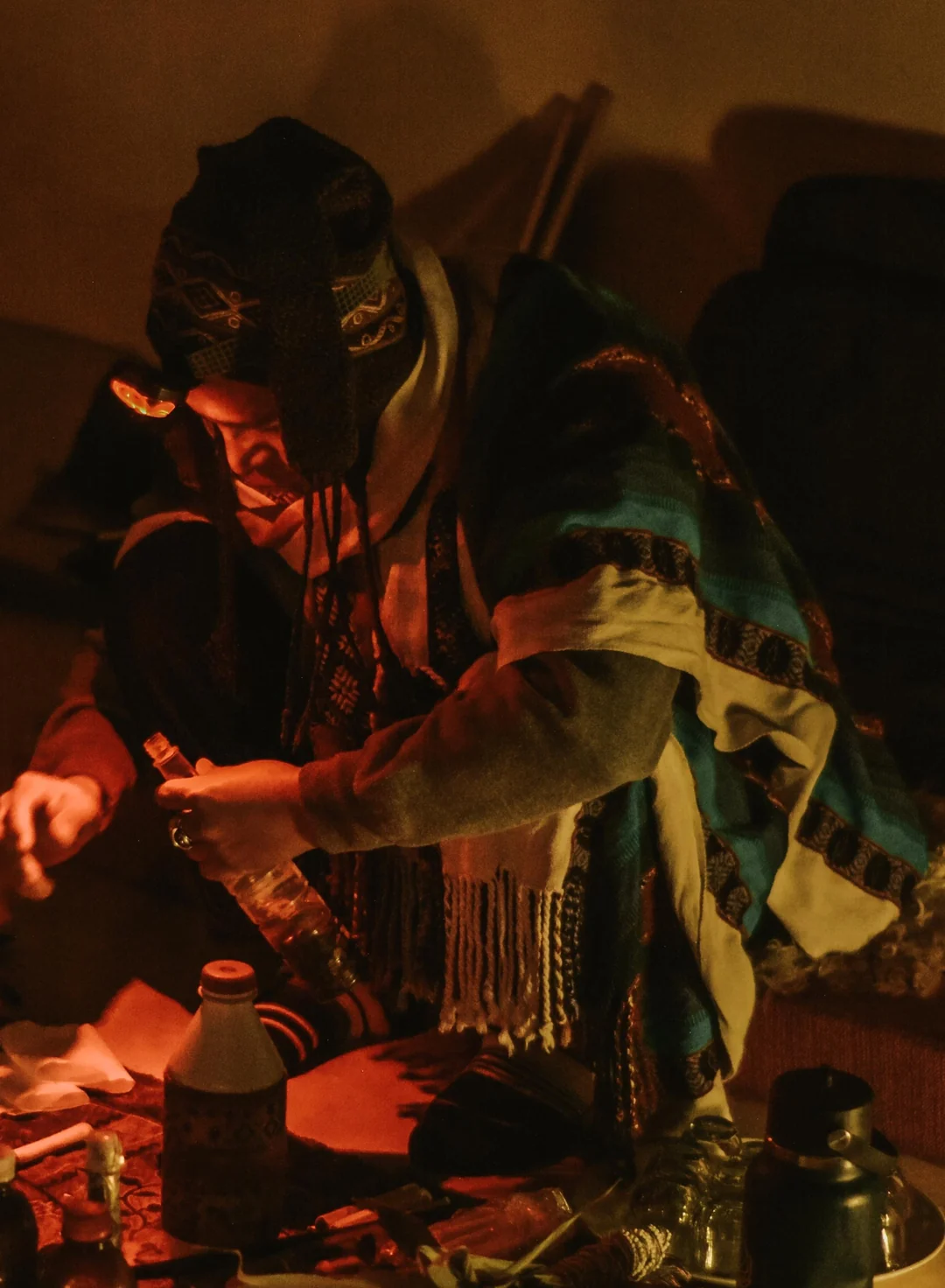
What interests us most is not the diagnosis. It is the cure. Because the traditional treatment for susto is not rest. Rest is not even the first step. It is a sequence: the limpia, the cleansing. Then herbal baths. Then sweat. And at the end, la llamada, the calling back, where the force that left is called home by name.
Somebody who has been running on empty for two years does not need to be told to lie down. They have been trying to lie down. What the old sequence understands, and what a spa week does not, is that something has to be actively called back.
Why rest alone stops working
Here is the part that surprises people.
Rest is necessary and it is not sufficient. If exhaustion could be solved by the absence of demands, every sabbatical would work, and they mostly do not. What tends to happen instead is that the week off restores you just enough to return to exactly the pattern that emptied you, at which point the clock starts again.
A week is not long enough to change your job, your marriage or your finances. Anyone selling you that is selling something. What a week can plausibly do is narrower and more useful:
- Get you sleeping properly again. This is the one that moves first and the one everything else depends on.
- Give your autonomic nervous system repeated, deliberate practice at moving from load into recovery, so that the route becomes available again.
- Show you your own numbers, so you stop guessing about how depleted you are.
- Send you home with two or three things you will actually keep doing, chosen by you rather than prescribed.
That is a modest list. It is also achievable, which the bigger promises are not.
What we have found actually changes something
The old sequence is what gives a week like this its shape. It tells you what comes first, what comes last, and why one thing has to precede another. But knowing the shape of something is not the same as knowing what heat, or breath, or a proper night of sleep is actually doing inside a body, and for that we go and read.
We have found the two do not compete. Where we have looked, the tradition and the research keep pointing at the same things, which is most of what follows.
Warm water, and why we stopped reaching for cold
Cold plunges are everywhere right now, and we do keep a cold tub. But for people arriving depleted, we lean the other way, and the reason is specific.
A systematic review and meta-analysis of thirteen trials (Haghayegh and colleagues, Sleep Medicine Reviews, 2019) pooled thirteen trials and found that warming the body in water at 40 to 42.5°C, for as little as ten minutes, one to two hours before bed, significantly shortened the time it took people to fall asleep, and improved both self-rated sleep quality and sleep efficiency. The researchers’ own university put the average at about ten minutes earlier.
We should say what the authors say about their own work, because it matters: they note the evidence base here is still small, and that the optimal timing and duration are not settled. This is the best-supported lever we know of for falling asleep faster. It is not a proven cure for anything. The mechanism is not mysterious. Warming the surface of the body opens the peripheral blood vessels, heat leaves through the skin, core temperature drops, and that drop is one of the signals sleep runs on.
Cold exposure does real things, and much of the research behind it has been done on athletes and recovery rather than on people arriving depleted. We are not saying cold is wrong. We are saying that when someone turns up with a nervous system already stuck in the on position, our experience is that another shock is not the first thing they need, and the evening is not the hour for it.
What makes this worth building a week around is the convergence. The baño de hierbas, the herbal bath, is already part of the susto sequence here, and has been for centuries. It also happens to be the best-evidenced thing you can do for sleep onset in the evening. The tradition and the physiology land on exactly the same bath.
One caveat, and we would rather over-state it, because this is the part people go and try at home. The trials used water at 40 to 42.5°C, and that upper end sits above what general safety guidance allows. The CDC’s guidance for hot tubs is not to let water exceed 40°C, because sitting in hotter water for long mimics a fever and risks hyperthermia. If you have a heart condition, high or low blood pressure, an irregular heartbeat, or you take medication for any of those, ask your doctor before hot bathing at all. The same goes if you are pregnant. Use a thermometer rather than guessing, and keep it short.
Sweat, and what the temazcal is doing
The temazcal is a Mesoamerican sweat lodge, and it is the oldest structure in this region’s healing tradition. The door faces the fire, the heat comes from volcanic stones, and the plants that go on them are chosen, not decorative.
Physiologically it is heat, and heat does much of what the bath does, more intensely. Culturally it is doing something the bath is not. A temazcal is not a session you receive. You have to stay in it, in the dark, when your mind is telling you to leave. For someone whose default has become escape, that is the practice, not the discomfort around the practice.
We wrote about what actually happens inside one separately.
Breath, and the reason the exhale matters
The most reliable lever anyone can carry home is the length of the out-breath. Vagal activity is restored on the exhale, which is why slowing your breathing and making the out-breath longer than the in-breath shifts the balance toward recovery. It is one of the better-evidenced things in this whole field: a systematic review and meta-analysis of voluntary slow breathing (Laborde and colleagues, 2022), pooling more than two hundred studies, found it increases parasympathetic control of the heart, both during the breathing and afterwards. It works in the moment, for free, without equipment, in a meeting room.
We teach it as the boring one. It is the one people still use six months later.
Being held in water
Some people cannot relax on land. They have tried, and lying still just gives the mind more room to work. Warm water in the dark takes away the weight and most of the sensory input at once, and something lets go that would not otherwise.
That is what Janzu is, and it is the practice that most often surprises the people who were most sceptical about it.
The question almost nobody asks: what do you leave with?
Here is a thing worth knowing when you compare burnout retreats.
Almost none of them measure burnout. That is our own count, not a study: we went through the burnout categories on the big retreat platforms and read what each week says it includes. There are weeks that measure your cholesterol. There are many that measure nothing. We found close to none that measure the thing they are selling you a recovery from. Go and check for yourself before you book anywhere, including here.
This matters more than it sounds, for a reason that has nothing to do with science.
The people who need this week most are the ones who feel the least entitled to take it. They are the ones who work through their holidays. Rest, for them, reads as indulgence, and the guilt follows them onto the plane. What changes that is not being told to be kinder to themselves. It is walking out with a page that says where they actually were on day one, where they were on day seven, and where they were ninety days later.
That is the difference between a nice week and something you can show a partner, a manager, or the part of yourself that thinks you are being self-indulgent. You should leave with a number and a written plan, not just a feeling.
The instruments are not exotic and they cost nothing. The Copenhagen Burnout Inventory, the Perceived Stress Scale, the WHO-5 wellbeing index, your resting heart rate, and how you are sleeping. Ask any retreat you are considering whether they use anything at all, and what they hand you at the end.
What to look for in a burnout retreat in Mexico
If you are comparing places, these are the questions we would ask, including of us.
Who is actually holding it, and are they there? Some centres rent a beautiful property to a visiting facilitator who leaves when you do. Not wrong, and worth knowing before you arrive.
Is it a retreat or is it treatment? A retreat is not a clinic. If you are in acute crisis, having thoughts of harming yourself, or need supervised withdrawal from anything, you need medical care and a retreat is the wrong door. A place that takes that booking anyway is telling you something about itself.
Do they screen? A short form and a conversation before you pay. Partly for your safety, partly because a group works when the people in it belong in the same room.
How big is the group? Above roughly fifteen, a week like this becomes a programme you attend. Below about six, the group has too little in it to hold anyone.
What happens to your phone? Not a gimmick. If nobody addresses it, the week competes with your inbox and your inbox usually wins.
What happens after you leave? The month after you get home is when it either takes or evaporates. Ask whether anyone will still be in contact then.
And what do you leave with? See above.
A word on what to be careful of
Two things, said plainly.
Burnout and depression overlap enough that people arrive unsure which one they are in, and clinicians take that overlap seriously. Burnout is tied to load, most often work. Depression is its own condition and it needs its own care, and a week away is not a treatment for it. If you are not sure which one you are in, that conversation belongs with your doctor before it belongs with any retreat centre, ours included.
And be careful of anyone promising transformation in seven days. What a good week does is smaller and more durable than that: it gives your body a clear demonstration that another state is available, and it sends you home able to find your way back to it.
Where we are with this
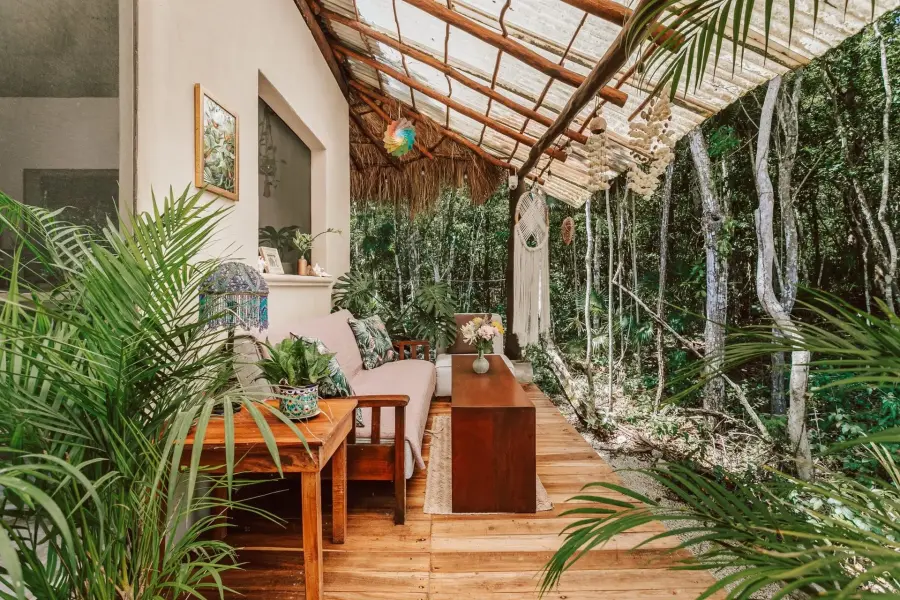
Casa Arkaana is five acres of jungle twenty minutes north of Tulum. Since 2021 we have hosted retreats here, and held our own, and we have watched what the land does to people who arrive with nothing left.
We are building a week specifically for this, around the old sequence: the cleansing, the baths, the sweat, and the calling back. Traditional medicine carried by practitioners who hold it, alongside practices we can show you the evidence for. Twelve people. The measurement above, repeated at thirty and ninety days.
It is called The Calling Back, and the first week is April 25 to May 1, 2027, at the end of the dry season.
If it sounds like the week you have been needing, leave us your email and we will write to you first when booking opens. If you would rather just talk to a person about where you are at, our door is open for that too.
Casa Arkaana is a retreat centre, not a medical or psychiatric facility. Nothing here is medical advice. If you are in crisis, please contact your doctor or your local emergency service.
Frequently Asked Questions
What is a burnout retreat?
A residential week built to bring an exhausted nervous system back into regulation, rather than to entertain you. In practice that means sleep protected as the first priority, movement and breathwork that work on the autonomic nervous system, heat and water used deliberately, unstructured hours, and a plan for what changes when you get home. It is not treatment. If you are in crisis, or need medical detox or psychiatric care, a retreat is the wrong container and any centre worth its name will tell you so before taking your money.
Is a burnout retreat different from a holiday?
A holiday removes you from the load. That helps, and it also wears off, which is why so many people come back from two weeks away and feel flat again within a fortnight. A burnout week is trying to do something narrower: change how your body handles load, and send you home with something you can keep doing. The test is simple. Ask what you leave with. If the answer is only a feeling, it is a holiday with better scenery.
How long should a burnout retreat be?
Long enough to sleep properly, which is rarely the first night. Most people do not drop until the second or third night, so a long weekend mostly buys you the arrival. Seven days is the shortest container we would build for this: two days to land, three where the work actually happens, and the last two to make it portable.
How much does a burnout retreat in Mexico cost?
Wider than most people expect, and the headline number is not comparable between places. On the big booking platforms, all-inclusive week-long wellness retreats in Mexico commonly start around $1,300 to $1,500 per person and run up through the low thousands. Programs built specifically around burnout, and anything clinically or medically supervised, sit well above that, and destination spas can run into five figures. Before comparing two numbers, ask each place the same three questions: how many nights, what is actually included, and how many people will be in the group. A cheaper week with twenty strangers and a la carte therapies is not the same product as a smaller one with everything in it.
What is susto?
A condition named in Mexico long before the word burnout existed. In Nahua understanding the tonalli, the vital force, is shocked out of the body by something frightening or overwhelming. It is not only folklore: susto appears in the DSM-5, described as an illness attributed to a terrifying event that leads to unhappiness, illness and difficulty carrying out the ordinary functions of a life, and a 2023 review in Transcultural Psychiatry found three of its subtypes overlap symptomatically with depression, PTSD and somatic disorder. That same review calls it an idiom of distress, a way a culture makes sense of suffering, rather than a diagnosis you could set beside a modern one, and we would say the same. What drew us to it is the treatment, because it is not rest. It is a sequence of cleansing, herbal baths and sweat that ends with la llamada, the calling back.
Can I come if I am taking medication for anxiety or depression?
For a burnout retreat, usually yes, and you do not stop anything for us. That is a difference worth naming: our plant medicine work requires a washout supervised by your own doctor, and this does not. What we do ask is that you tell us on the call, so we know what we are holding and so nothing in the week works against your treatment. Keep taking what you are prescribed and keep your own prescriber in the loop.
Is burnout the same as depression?
They overlap enough that they are often confused, and clinicians take that overlap seriously. Burnout is tied to load, most often work. Depression is its own condition, it needs its own care, and a week away is not a treatment for it. Any retreat that tells you otherwise is one to walk away from. If you are not sure which one you are in, that is a conversation for your doctor first and a retreat second.