Asdru's story: the Grandfather called him to the desert at eighteen, then years away — and how peyote (hikuri) finally brought him home to Mexico.
I grew up in Jalisco, and the Wixárika grew up around me. Their yarn paintings, their beadwork, the deer and the peyote and the five sacred directions woven into all of it — I knew them before I understood them. You don’t grow up in Jalisco without the Wixárika somewhere in your life, in one way or another.
I was eighteen, still in high school, when a friend who had already been to the desert planted the seed in me. So we went — by bus, slowly, the way you should. You reach Real de Catorce through a tunnel carved straight through the mountain, and for a few minutes there is nothing but stone and dark. Then you come out the other side into an old silver town, colonial, half-forgotten by time — and it feels like you traveled through time to arrive. That is the doorway to Wirikuta, the desert where the Wixárika say the sun was born, and where the ancestors first ate the hikuri.
We didn’t wait. Above the town rises the Cerro del Quemado, the sacred mountain of the Wixárika. We rented horses the same day we arrived, rode as high as the horses could climb, and walked the rest. At the top I could feel it — a circle of stones laid out like a portal, offerings left in the wind. We made camp late. The wind was so strong we built a wall of stones just to hold a fire.
While we gathered wood, the cannabis I had carried in my pocket simply vanished. I have never doubted what that was. The place was telling me: not that. You came for the Grandfather. Don’t get distracted. We spent the night up there, the wind never resting, and even a bare mountain in the middle of the desert felt completely alive — full of spirits, full of something older than us.
In the morning we could see Estación 14 on the far side. The Cerro del Quemado divides the two worlds: behind us the beautiful colonial village, ahead of us an old train station at the edge of the desert we had come for. So we started down the opposite face and walked. From the top it had looked close — two hours, I thought. It took us eight or nine. That is the desert teaching you its first lesson: nothing here is as near as it looks, and you arrive on its time, not yours.
Estación 14 was almost a ghost town, with a few unforgettable characters still in it. We rented a room in a woman’s house and settled in. Then a Jeep rolled past, driven by kids — twelve, maybe thirteen years old. My friend knew the part of the desert we were looking for, a place called El Tecolote, where an old man lived that people spoke of as el jefe del desierto, the chief of the desert. We made a deal with the kids to drive us out at first light.
The next morning they dropped us in the middle of the desert with our camping gear. We found a big, beautiful tree to shelter under — a yucca of the kind that only grows out there — and set up our tents. We were four men and one woman. We were so eager to go and hunt the blue deer, the peyote, but we couldn’t leave the camp unattended. So two of us stayed and three went walking. They were gone for hours and hours, and came back with empty hands.
The moment they returned, a man appeared out of nowhere. We’ve been watching you for hours, he said, and the jefe del desierto is asking if you’d like to camp on his land. That was exactly the man our friend had spoken of. We packed everything, walked another hour, and arrived at his land — deeper in the desert, a few others camped there too. He welcomed us with a handful of peyote already in his hands. We told him we wanted to find it ourselves, to leave our offerings, to do it properly. Of course, he said. I’ll show you. Just take this one first.
So we ate, and he walked us out toward Wirikuta. After an hour he stopped. From here, you walk alone. Everyone found their own direction. I watched my friends begin to find the hikuri in the sand, and I found nothing — nothing at all — and then, all at once, I looked down and I was standing in the middle of it, surrounded. They say you don’t find the hikuri; the hikuri finds you. That is exactly how it was.
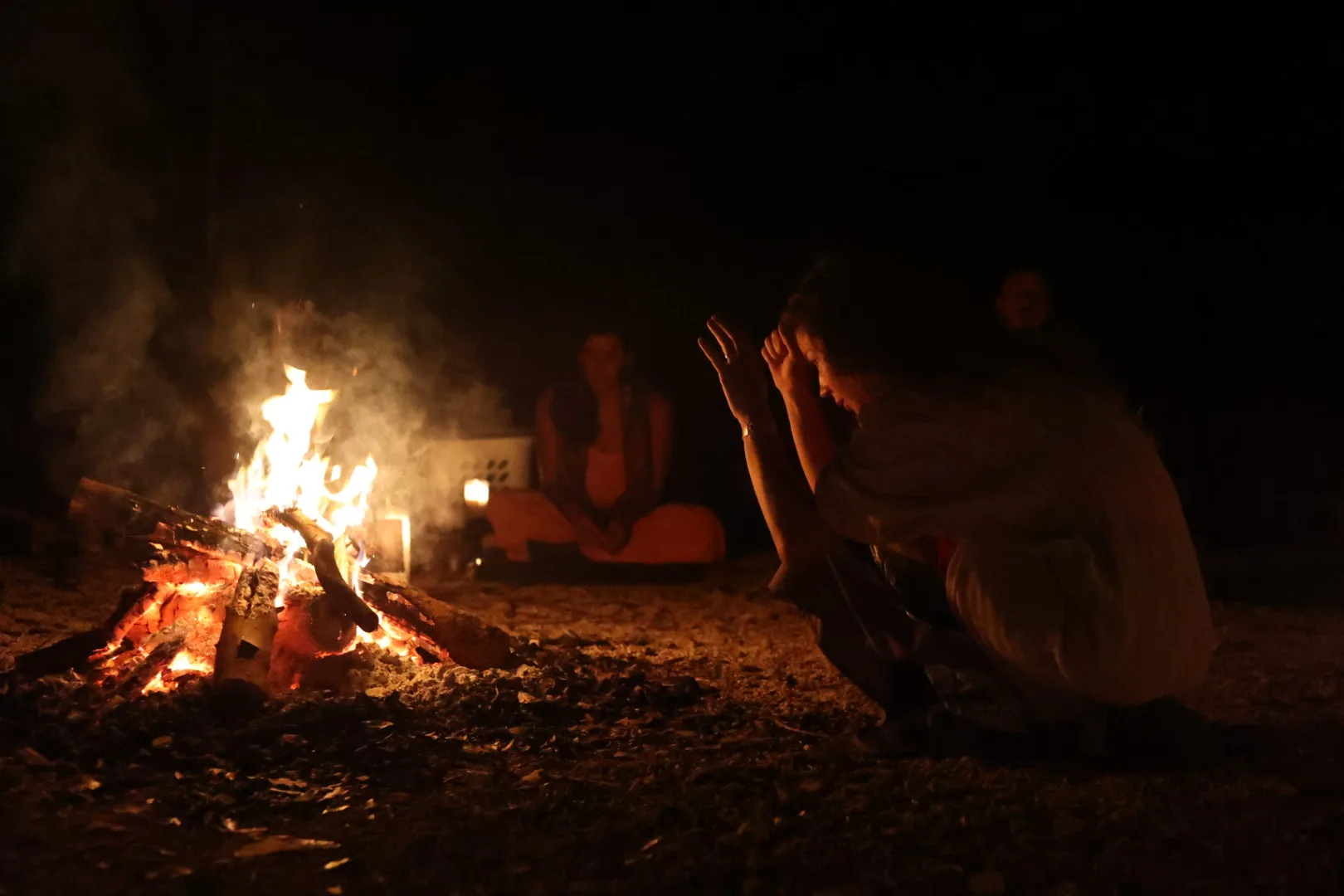
I took a branch and cut it into a natural knife, and with that I cut the peyote — never pulling the root, because it takes years to grow back. You take only the crown, and you leave the root in the earth, and you leave an offering of tobacco in the place where it gave itself. We carried our hikuri back to camp and stayed four nights, keeping a great fire through the dark. People lost in the desert would see the flames and drift in toward them. It was its own kind of magic.
And yet — I have to be honest — that first time had nothing to do with the Wixárika themselves. There was no marakame with us. It was five young people, called by something we couldn’t yet name, and the Grandfather met us anyway, and was patient with us. It would take me years to understand what I was really standing inside of. That understanding is the whole reason I do things the way I do them now.
That encounter in the desert was my only one for a long time. Life took me across the ocean, and I spent almost seven years in England — years away from the land and its medicines, far from the roots I’d grown up inside. What brought me home was the Grandfather himself. A dear friend carried a dried hikuri all the way to England, and we sat with it there, and in that ceremony the medicine was clear with me: go home. Go back to Mexico. Return to your family. Do your work. That is what brought me back.
Coming home, I began to meet the tradition the way I never had as a young man. I had the fortune to go to San Andrés Cohamiata, the heart of the Wixárika world, high in the Sierra, with my father and good friends during Semana Santa, when the whole community gathers. The families come in from the rancherías all around, bringing cows and sheep and goats, turkeys and chickens, and lay a great offering in the main square before the church. And the jícareros return — the ones who carry the community’s prayers — after walking the five sacred directions, the five secret places where they leave offerings each year, and then on to Wirikuta to hunt the blue deer and harvest the hikuri. They come back to San Andrés with baskets of it, and the celebration begins. To stand there, with my father beside me, and be given hikuri in that place, by those people — that is when I began to understand the difference between taking a medicine and being part of a ceremonial circle.
After that, I was invited to sit in prayer near Guadalajara — a tipi on the city’s edge, in the Red Path way, held by a Lakota elder. But a marakame was always there too, because the marakames are the keepers. In Mexico they are the ones who may legally carry the peyote; the tradition lives in their hands. Different form, same Grandfather. I sat in many of those nights.
And from there, everything opened — in time, even the door to other medicines, to ayahuasca. But it was the Grandfather who returned me to my roots first, and everything Casa Arkaana became grew out of that return.
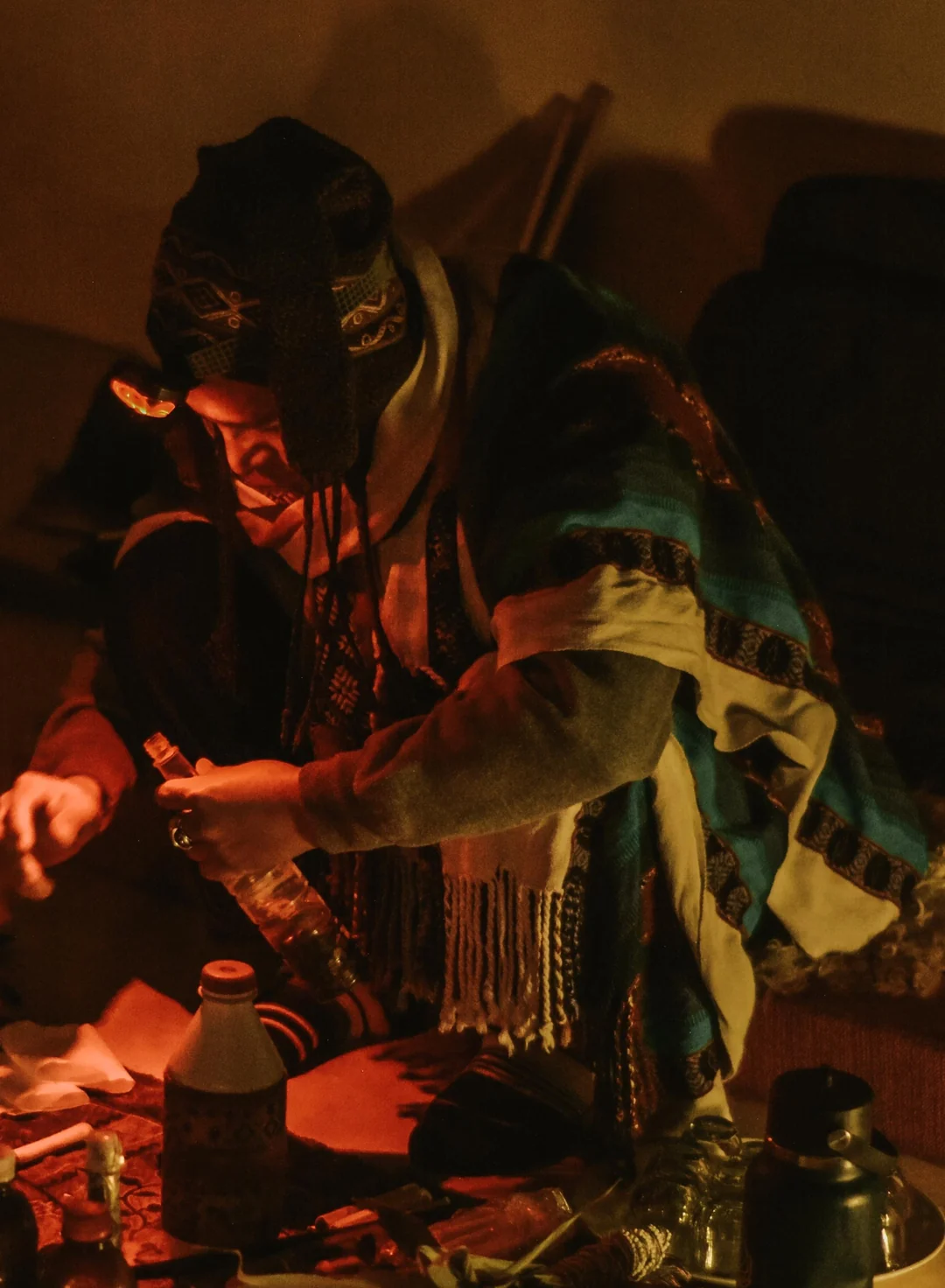
So it is not by accident that, every year now, we host the Carrillo family at Casa Arkaana. Antonio these past two years, and this year Filiberto — both marakames, both from San Andrés Cohamiata, carrying the medicine the way it is meant to be carried. This is our third year welcoming them home to our land.
I share my story so you understand why we hold it the way we do. Peyote is not something to chase alone in the desert — I know, because I was that eighteen-year-old, and the Grandfather was gentle with me, and even then I was only standing at the edge of something I didn’t yet understand. Here, the medicine is held by its true keepers, in ceremony, with a marakame present, in a family that loves this land. Hikuri is the medicine of Mexico — the Grandfather of this soil — and it feels right that it has a home with us.
We are only at the beginning of this. For now it is one sacred night, once a year, with the Carrillos. But the Grandfather planted something, and it is growing. A peyote retreat, held here the way it should be held — that is coming.
If the Grandfather is calling you, reach out. We’ll talk, honestly, about whether this is your time.
Frequently Asked Questions
What is hikuri?
Hikuri is the Wixárika (Huichol) word for peyote, the small sacred cactus of the Mexican desert. To many traditions it is known as the Grandfather — the medicine of this soil. The Wixárika consider it a living relative, gathered on pilgrimage to their sacred desert, Wirikuta.
Is peyote legal in Mexico?
Peyote is a protected species in Mexico, and its ceremonial use is recognized within Indigenous tradition. The Wixárika people and their marakames are its traditional keepers — the ones who carry the medicine and the songs. At Casa Arkaana we do not sell or hand out peyote; our yearly ceremony is held by a marakame from the Wixárika community, in the traditional way.
What is a marakame?
A marakame is a Wixárika healer, singer, and keeper of the medicine. They carry the prayers, the songs, and the responsibility of holding the ceremony. At Casa Arkaana we host the Carrillo family — Antonio in past years, and Filiberto this year — both marakames from San Andrés Cohamiata.
What is Wirikuta?
Wirikuta is the sacred desert in San Luis Potosí, near Real de Catorce, where the Wixárika say the sun was born and where their ancestors first ate the hikuri. Each year the community makes a pilgrimage there to gather peyote and leave offerings. It is one of the most sacred places in Mexico.
Do you host peyote ceremonies at Casa Arkaana?
Yes. Once a year we welcome the Carrillo marakames to our land for a sacred peyote night, held in the Wixárika tradition. A dedicated peyote retreat, held the way it should be held, is something we are growing toward — reach out if you would like to be part of it when it comes.