What a cacao ceremony is, its meaning and benefits, our ceremonial cacao recipe and what happens in the circle, from a family-run sanctuary near Tulum.
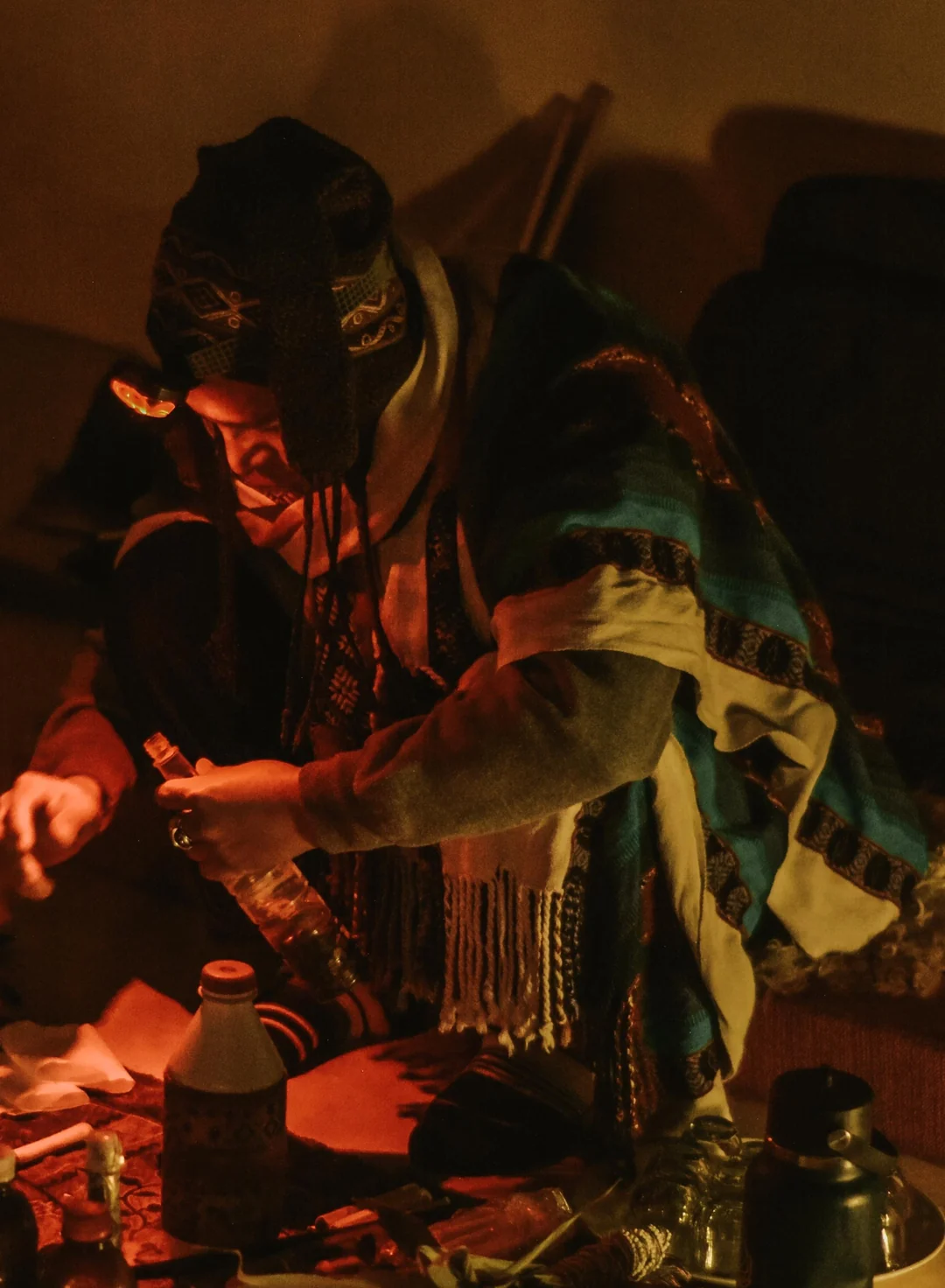
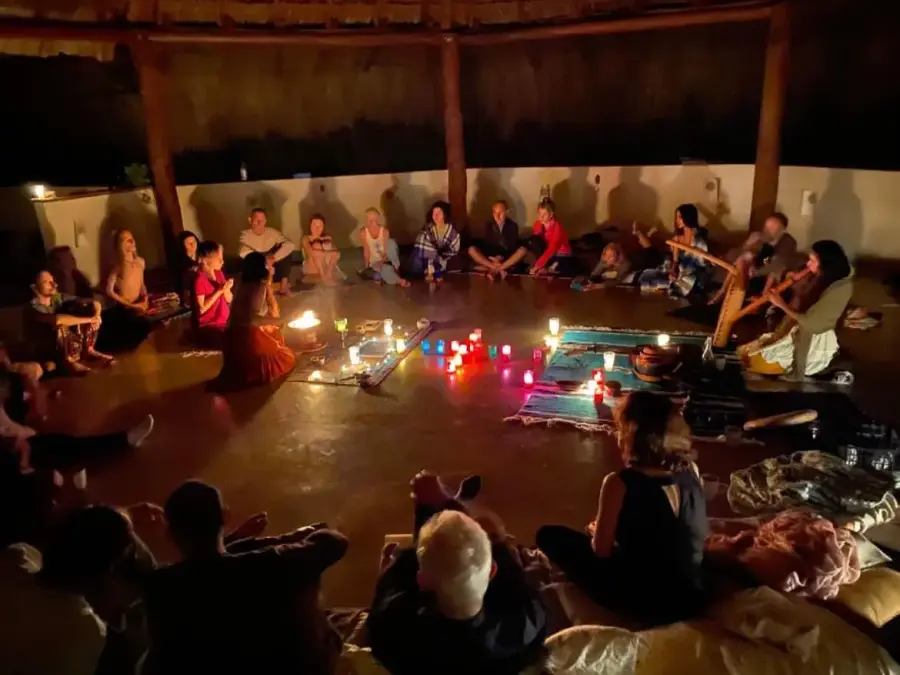
The Temple is quiet before anyone arrives. Mats in a circle, blankets folded, cushions placed, candles lit. The smoke of copal moves slowly through the space. On the altar there is a pot of warm cacao, dark and thick, smelling of cinnamon and vanilla.
This is how a cacao ceremony begins at Casa Arkaana.
What Is a Cacao Ceremony?
A cacao ceremony is a circle where people drink ceremonial cacao together with an intention. It usually includes the story of the plant, a moment to set an intention, the cacao itself, music and time to share. It is a gentle, heart-opening ritual with roots in the Mayan and Mexica traditions of Mexico, and it is often used to open a retreat or to mark a new beginning.
What is ceremonial cacao? It is the whole cacao bean, roasted, peeled and ground into a paste, with nothing taken out. It is thicker and richer than cocoa powder or chocolate, and it is prepared as a warm drink to be taken slowly, with presence.
The Meaning of Cacao for Us
For Asdru, who was born in Mexico, cacao is part of his heritage. It is a plant his ancestors honored long before chocolate came in a wrapper. The Maya and the Mexica drank it in their rituals and celebrations, and cacao beans were valued so highly that they were used as currency. The word chocolate itself comes from Nahuatl.
We honor cacao as a very powerful plant, a very sacred one, and a delicious one too. It is a plant that opens the heart. It helps people connect, unites intentions and brings hearts together. That is why we love to open a retreat with it: it opens a portal of presence and awareness, and it sets the tone for everything that follows.
A Short History of Cacao
Cacao is much older than chocolate. The oldest evidence of people using it comes from the upper Amazon, in what is now Ecuador: traces of cacao found in ceramic vessels of the Mayo-Chinchipe culture, about 5,300 years old, used both as offerings in tombs and in daily life (Zarrillo et al., Nature Ecology & Evolution, 2018).
From there cacao traveled north to Mesoamerica. The Olmecs drank it, and for the Maya it became sacred. They called it kakaw, painted it on their ceramics and offered it to their gods. Later the Mexica valued the beans so highly that they used them as currency, and the drink was served at ceremonies and feasts. When we sit in a circle with a cup of cacao in the Mayan jungle, we are taking part in a story thousands of years old.
The Cacao We Use
The cacao we serve comes from Yucatán, from Kia, who prepares it by hand with the grandmothers. It is ceremonial cacao: the whole bean, roasted, peeled and ground into a paste, with nothing taken out.
For each person we prepare around 50 grams, warmed slowly with water. Then we add a little vanilla, cinnamon, honey and a pinch of cayenne pepper. In the tradition, the cayenne is said to help carry the properties of the cacao through the body, and it gives the cup a warmth you feel in your chest.
What Happens in a Cacao Ceremony
A ceremony at Casa Arkaana usually lasts between one and two hours. Maja and Asdru normally guide it, and sometimes we invite other musicians and space holders to join us.
1. Arriving in the circle. We prepare the Temple with memory foam mats, blankets and cushions in a circle. As people arrive, we smudge each person with copal, and everyone takes their place.
2. The story of cacao. We share where cacao comes from and how it was used in pre-Hispanic times. It is a beautiful story, and it helps people understand that they are not just drinking a warm drink. They are taking part in something very old.
3. Setting an intention. We pass cacao seeds around the circle. Each person holds a seed, puts their intention into it and then peels the shell. The shells go into the fire of the sahumador and burn, as a symbol of transmuting what we are ready to let go.
4. Drinking the cacao. Each person receives a cup. While everyone drinks, songs are played on guitar, drum and other instruments, and the cacao starts to move through the body.
5. Sharing. At some point there is space for each person to share, if they wish: their intention, a prayer, something they are feeling. Listening to each other is one of the most beautiful parts of the ceremony.
6. Where it goes from there. Every group is different. Sometimes the ceremony turns into a sound healing and people lie down and rest in the music. Sometimes it becomes an ecstatic dance. We follow the energy of the circle.
How a Cacao Ceremony Feels
Our guests love the cacao ceremony because it is so subtle, and at the same time cacao is a strong plant. You feel it.
People feel very peaceful and calm, relaxed and open-hearted, and also awake. There is a natural, delicious lift, the feeling of having put down a weight you have been carrying. And with it comes a beautiful mental clarity.
Cacao is not a psychedelic. It does not change what you see or take you somewhere else. It brings you back to your heart, here, in the circle, with the people around you.
The Benefits of a Cacao Ceremony
Every person lives it in their own way, but these are the things our guests tell us most often:
- An open heart. People feel softer, more connected to themselves and to the people in the circle.
- Calm with clarity. A relaxed body and, at the same time, an alert and clear mind.
- A natural lift. Cacao naturally contains theobromine and a little caffeine, so many people feel a soft, steady energy without the rush of coffee.
- A clear intention. Holding the seed, naming what you want to release and what you want to call in gives the ceremony a direction that stays with you.
- Connection. Sharing and listening in a circle creates trust very quickly, which is why it is such a good way to open a retreat.
A cacao ceremony is a ritual, not a treatment, and we never present it as a cure for anything.
Ceremonial Cacao Recipe: How to Prepare It at Home
If you want to bring a little of the ceremony home, this is how we prepare one cup:
- Chop about 40 to 50 grams of ceremonial cacao (whole bean paste, not cocoa powder).
- Warm a cup of water until it is hot but not boiling, and melt the cacao into it slowly, whisking as you go.
- Add a touch of vanilla, cinnamon, honey and a pinch of cayenne. Whisk until it is smooth and a little foamy.
- Before you drink, hold the cup and set an intention. Drink it slowly, in silence or with music, and give yourself time afterward to write, move or simply rest.
If it is your first time, start with half the amount and see how it feels.
When We Hold Cacao Ceremonies
At Casa Arkaana cacao is an offering we bring into a retreat at the moment it is needed most:
- To open a retreat, so the group arrives, connects and sets its intentions together.
- During a retreat, as a pause to gather the circle and listen to each other.
- To close a retreat, sharing what each person takes home.
Our seven-day retreat, Surrender to Remember, includes a cacao ceremony as part of the week. See the next dates and details here.
If you are a facilitator bringing your own group to Casa Arkaana, you can add a cacao circle to your program, held in the Temple and guided by our team. Read about hosting your retreat with us.
Before You Come
Ceremonial cacao is gentle for most people. Cacao naturally contains theobromine, a mild stimulant, along with a little caffeine, magnesium and flavonoids. That is why we ask you to tell us beforehand if you are pregnant, have a heart condition or take regular medication, especially antidepressants, and we will adjust your cup or suggest a lighter one.
Come with comfortable clothes, an open heart and an intention, even a simple one. The cacao, the music and the circle will do the rest.
Cacao at a Glance
| Ceremonial cacao | Cocoa powder | Chocolate bar | |
|---|---|---|---|
| What it is | Whole roasted bean, ground into a paste | Bean with most of the fat pressed out | Processed cacao with sugar, often milk |
| Fat (cacao butter) | All of it | Very little | Varies |
| Sugar | None added | None | Usually a lot |
| How it is used | Warmed with water, drunk slowly in ceremony | Baking, everyday drinks | Eaten as a sweet |
| Cacao ceremony at Casa Arkaana | |
|---|---|
| Where | The Temple, a covered octagonal space in the jungle, Chemuyil, 20 min north of Tulum |
| Length | 1 to 2 hours |
| Guided by | Maja and Asdru, sometimes with invited musicians and space holders |
| Cacao | Ceremonial cacao from Yucatán, prepared by hand by Kia with the grandmothers |
| Amount | About 50 g per person, with vanilla, cinnamon, honey and cayenne |
| What happens | Copal, the story of cacao, intention with the seeds, drinking, music, sharing, then sound healing or dance |
| How to join | Inside our retreats, such as Surrender to Remember, or as an add-on for facilitators renting the property |
With love from the jungle,
Asdru & Maja
Frequently Asked Questions
What is a cacao ceremony?
A cacao ceremony is a circle where people drink ceremonial cacao together with an intention. Cacao has been sacred in Mexico since pre-Hispanic times, when Maya and Mexica peoples drank it in rituals and celebrations. Today a ceremony usually includes the story of the plant, setting an intention, drinking the cacao, music and a moment to share. At Casa Arkaana it often flows into sound healing or free movement, depending on the energy of the group.
How long does a cacao ceremony last?
At Casa Arkaana a cacao ceremony lasts between one and two hours. It is held in our Temple, a covered octagonal space in the jungle, with the group sitting in a circle on mats, blankets and cushions.
How does ceremonial cacao feel?
Cacao is subtle and at the same time a strong plant. Most people feel calm, relaxed and open-hearted, with a soft lift of energy and a clear mind. Guests often describe it as setting down a weight they had been carrying. It is not a psychedelic and it does not change your perception.
What is the difference between ceremonial cacao and chocolate?
Ceremonial cacao is the whole cacao bean, roasted, peeled and ground into a paste, with nothing taken out and very little added. Chocolate is usually processed, with fat separated and sugar and milk added. Ceremonial cacao is thicker, more bitter and much richer. The cacao we serve is prepared by hand in Yucatán.
How much cacao is served in a ceremony?
We prepare around 50 grams of ceremonial cacao per person, warmed with water and a touch of vanilla, cinnamon, honey and a pinch of cayenne pepper.
Can I join a cacao ceremony near Tulum?
Cacao ceremonies at Casa Arkaana take place inside our retreats, such as Surrender to Remember, and as part of retreats led by visiting facilitators. Groups and facilitators renting the property can add a cacao circle to their program. Casa Arkaana is in Chemuyil, in the Riviera Maya, 20 minutes north of Tulum and 30 minutes south of Playa del Carmen.
Is a cacao ceremony safe?
For most healthy adults, ceremonial cacao is very gentle. Cacao contains theobromine, a mild natural stimulant, so if you are pregnant, have a heart condition or take regular medication, tell us beforehand and we will adjust the amount or suggest a lighter cup.
Is a cacao ceremony the same as an ayahuasca ceremony?
No. Cacao is a gentle heart-opening plant and it is not a psychedelic. A cacao ceremony lasts one to two hours and you stay fully clear and present. Ayahuasca is a much deeper plant medicine, held at night, that requires screening and preparation. At Casa Arkaana we often open a retreat with cacao before the deeper work begins.
How do you prepare ceremonial cacao at home?
Melt about 40 to 50 grams of ceremonial cacao into a cup of hot, not boiling, water, whisking slowly. Add a touch of vanilla, cinnamon, honey and a pinch of cayenne, set an intention, and drink it slowly. If it is your first time, start with half the amount.
Does a cacao ceremony make you high?
No. Ceremonial cacao is not a psychedelic and it does not change your perception. Most people feel calm, open-hearted and softly energized, with a clear mind, because cacao naturally contains theobromine and a little caffeine.
Are there side effects of ceremonial cacao?
For most people there are none. Because of the theobromine and caffeine, a large amount can cause a faster heartbeat, restlessness or a mild headache in sensitive people. That is why we serve around 50 grams, suggest half a cup for a first time, and ask you to tell us beforehand if you are pregnant, have a heart condition or take medication, especially antidepressants.
Is a cacao ceremony cultural appropriation?
It depends on how it is held. Cacao is part of the living heritage of Mexico and Central America. At Casa Arkaana the ceremony is held by a Mexican family, we tell the story of where cacao comes from, and our cacao is bought from Kia, who prepares it with the grandmothers in Yucatán, so the work supports the communities it comes from.